
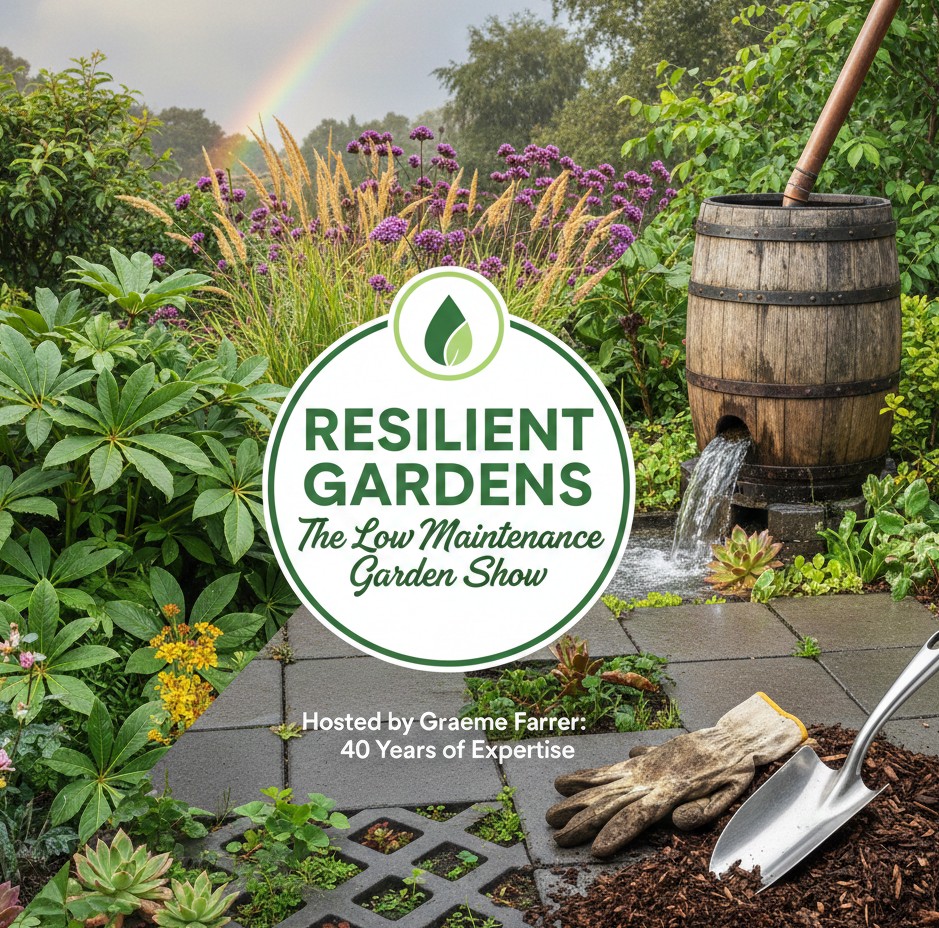
The Death of the Traditional Border: Engineering a Garden That Thrives in the UK’s “New Normal”
I’ve spent over 40 years on the front lines of British horticulture, and I’m telling you straight: the old rules are dead. As a Horticultural Consultant and the founder of Morpheus Garden Care, I have watched the rhythm of our seasons shift from predictable cycles to a chaotic pendulum. We are no longer gardening in the climate our grandparents knew.
Today, we are moving at breakneck speed from flash floods one week to scorching heatwaves the next. I see it every day in my consultancy work—gardens that were meticulously planned a decade ago are now literally washing away or baking into dust. It raises a critical question for every plot owner: is your garden actually built for the “New Normal,” or are you just one storm away from starting over? If you’re tired of seeing your hard work wilt, it’s time to stop reacting and start designing for resilience.
The British Garden is Breaking: Why Survival is No Longer Enough
The traditional British garden was a delicate thing, designed for gentle rains and moderate summers. That world is gone. When I talk about the “New Normal,” I’m talking about environmental volatility that punishes traditional methods. If your strategy is simply to “try and keep things alive” during a drought or a deluge, you’ve already lost the battle.
To thrive in this changing climate, we have to move beyond the concept of “surviving.” A resilient garden isn’t a victim of the weather; it’s a system designed to absorb the shocks. We need to build landscapes that treat extreme weather as a baseline, not an anomaly.
“The UK weather is moving from flash floods one week to scorching heatwaves the next. If you’re tired of seeing your hard work wilt or wash away, this is the show for you.”
The Permaculture Paradox: Why Design Beats Manual Labour Every Time
Most people think a resilient, climate-ready garden requires more work. As a permaculture practitioner and designer, I can tell you the opposite is true. This is the core philosophy behind my work and my new project, The Low Maintenance Garden Show. When you align your garden with nature’s logic rather than fighting against it, the landscape starts to do the heavy lifting for you.
As a registered member of The Gardeners Guild, my approach is strictly design-led. We aren’t just planting flowers; we are engineering ecosystems. By using permaculture principles, we create gardens that manage their own water and soil health. We are replacing the “old rules”—those grueling weekend chores and constant chemical interventions—with a smarter framework. The goal is a garden that is ecologically bulletproof and exceptionally easy to maintain.
“My mission is to help you build a landscape that doesn’t just survive the changing climate, but actually thrives in it—all without the grueling weekend chores.”
The 1-2-3 Framework: A Tactical Blueprint for Climate Resilience
Future-proofing your property shouldn’t feel like an insurmountable task. Whether you’re managing a sprawling rural estate or a compact urban courtyard, you need a repeatable system. My 1-2-3 Action Plan is designed to provide exactly that—a hierarchy of tasks that ensures your efforts actually yield results.
* One Big Structural Focus: This is the “Why” of your garden’s survival. Before you pick up a trowel, you must address the bones of the plot. This means engineering permanent solutions for drainage or installing strategic windbreaks. If the structure is wrong, the plants don’t stand a chance.
* Two Quick Maintenance Wins: This is how you reclaim your “Time.” By identifying two high-impact, efficient maintenance habits, we strip away the fluff and focus on what keeps the system running at peak performance without the burnout.
* Three ‘Climate-Hero’ Plants: These are the “Armor.” I select plants that are “tough-as-boots” yet stunningly beautiful. These specific varieties are chosen because they can handle the brutal swing from soggy, waterlogged roots in February to parched, cracked soil in August without missing a beat.
This ratio—Structure, then Maintenance, then Plants—is the only way to build true resilience. You cannot plant your way out of a structural drainage problem, and you cannot maintain your way out of a poor plant choice.
Designing for the Future
Gardening must evolve, or it will become a source of frustration rather than a sanctuary. We are designing for the next decade, not the last one. Ask yourself: what will the legacy of your plot be? Will it be a landscape that stands the test of time, or one that requires constant resuscitation?
It’s time to move beyond the traditional border. Join me at 6pm every Thursday evening from the 5th of March, for The Low Maintenance Garden Show, where we’ll break down the tactics you need to stay ahead of the curve. Listen to the full Podcast on Spotify and the watch the brief explainer videos on Youtube.
Don’t forget to hit the ‘Like’ and ‘Follow’ buttons now, so you don’t miss our first episode on March 5th.
Let’s get growing and build something that lasts. Happy Gardening!