
Stop Gardening for Your “Zone”: Why Your Backyard Has a Secret Weather Map You’re Ignoring
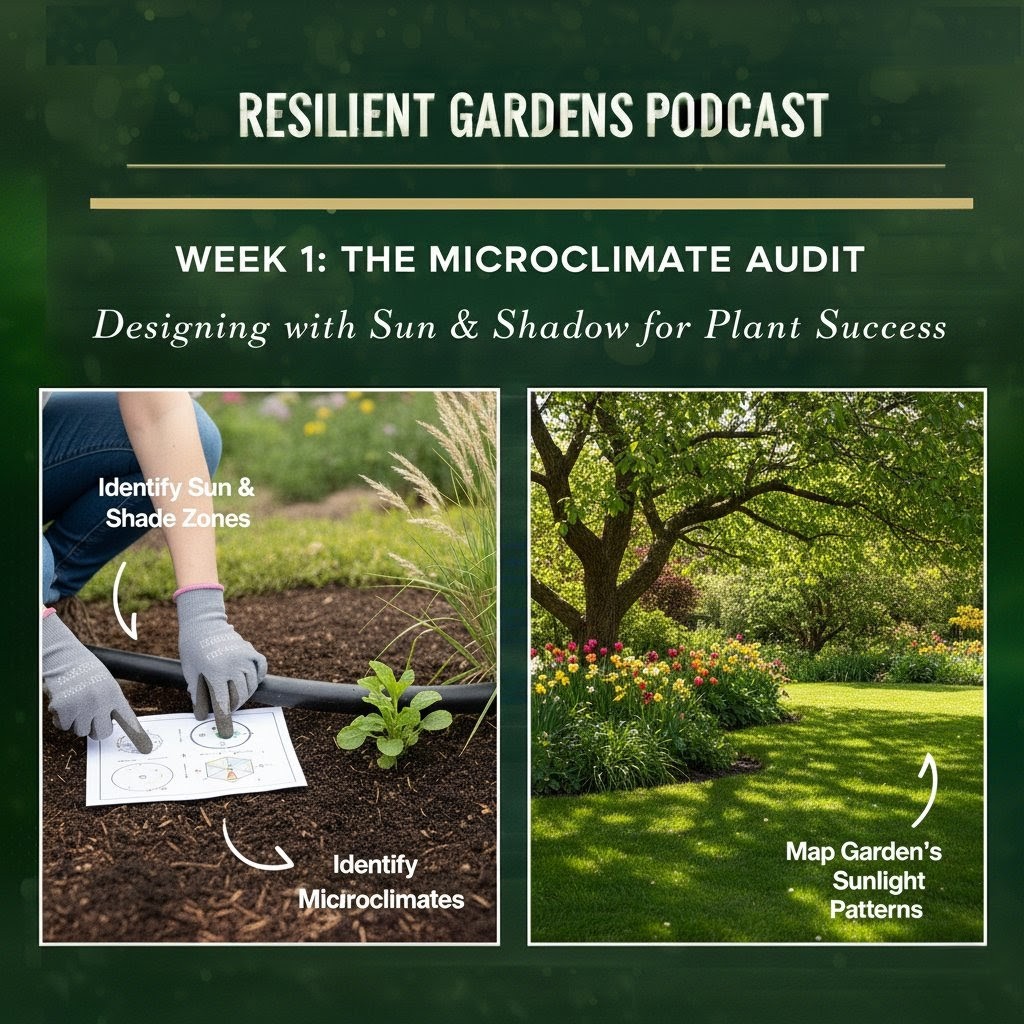
I’ve spent over four decades with my knees in the mud and my hands in the soil, watching the rhythm of the British seasons. In that time, I’ve seen the “old ways” of the gardening calendar—those reliable rules our grandfathers lived by—slowly shift beneath our feet. Today, we face a new reality of unpredictable droughts followed by sudden, heavy flash floods. Many well-meaning folks are still treating their land like a flat, two-dimensional canvas of fences and flowerbeds, but I’m here to tell you that true mastery doesn’t start with a shovel or a trip to the garden centre. It starts with a “Microclimate Audit.” Before you plant a single seed, you must learn to read the invisible forces of wind, heat, and water unique to your specific patch of earth.
Your Garden is a “Micro-Zone,” Not a “Zone”
One of the most common mistakes I see is gardeners relying on broad regional climate maps. The truth is, even within a modest suburban plot, the conditions can vary so wildly that moving from your back door to your back fence can be like traveling fifty miles in any direction. This shift in perspective—from broad zones to specific “micro-zones”—is the very foundation of resilience. A plant tucked into the “wrong” micro-zone is stressed from the moment it leaves the pot, fighting for its life against wind or heat it wasn’t built for. By identifying these pockets, you stop fighting the land and start building a landscape that can handle the extremes of the modern UK climate.
“You cannot fight nature and win; you can only partner with her and flourish.” — Graeme Farrer
The Best Time to Garden is During a Downpour
If you want to truly understand your land, you have to be willing to see it at its most vulnerable. That means when the clouds open and most people are running for the kettle, you need to put on your mac and boots and head outside. This is what I call the “Rain Audit.”
I want you to look for the “Sump Effect.” Identify the lowest points where water gathers and stays. If you see standing water more than two hours after the rain has stopped, you’ve found a “Drown Zone.” This usually tells us we’re dealing with heavily compacted clay or a high water table. The risk here is root suffocation; when soil stays waterlogged, oxygen is pushed out, and the roots literally drown. But here is the secret: don’t waste your energy or money fighting nature with expensive drainage pipes. Instead, view that Drown Zone as a gift. It is a ready-made basin for a moisture-loving rain garden ecosystem, turning a potential problem into a lush, thriving solution.
Beware the “Thermal Batteries” in Your Scorch Zone
Just as we map the water, we must map the heat. We often overestimate how much sun an area gets by glancing at it during a lunch break, but to be precise, you need the “Solar Audit.” Specifically, I want you to perform the “2:00 PM Test” on a clear day. This is the hour of peak intensity, where the sun’s rays are at their most punishing.
Pay close attention to what I call “Thermal Batteries.” These are your brick walls, dark-stained fences, and paved patios. These structures soak up UV rays all day and radiate that heat back out long after the sun has set. If the soil in these areas is cracked or hot to the touch by mid-afternoon, you’ve found your “Scorch Zone.” Planting tender, leafy greens here is a recipe for “sun-scald” and rapid desiccation. This area must be treated as a “Mediterranean” zone, reserved only for those species that demand “dry feet” and high heat.
Use “Thermal Buffers” to Cool Your Home and Land
Once you’ve mapped your Scorch Zones, you can start using what we call the ResilientGardens 1-2-3 Action Plan. The first step is your “1x Structural Focus”: the Thermal Buffer.
By planting deciduous climbers—think grapevines (Vitis vinifera) or hops—on your South or Southwest-facing walls, you aren’t just helping the garden; you’re helping your home. In the heat of summer, the dense foliage provides “evaporative cooling,” shielding the brickwork so it doesn’t act as a giant radiator for your living room. Then, in the winter, the plant drops its leaves, allowing the low winter sun to hit the walls and provide natural warmth when you need it most. It’s a simple, ancient strategy that creates a stable, temperate microclimate in the plant’s shadow.
The “Low-Tech” Intelligence of Cardboard and Stones
Resilience is also about protecting your own energy. I don’t want you working harder than you have to. This brings us to the “2x Maintenance Wins” of our plan. These are “analogue sensors”—low-tech ways to gather data that would cost a fortune in electronic gadgets.
- The Rain Shadow Correction: Look closely at the ground under large evergreen trees or right against your house eaves. These are “Rain Shadows,” and they stay bone-dry even in a deluge. Stop trying to force thirsty roses or lawns to grow there. Instead, recruit “dry shade” specialists like Epimedium or Hellebores. You’ll cut your watering chores by half the moment you make the switch.
- The Cardboard & Stone Test: Place a flat stone and a piece of cardboard in different spots for 48 hours. When you flip them over, the land will tell you its secrets. If the ground under the stone is parched and warm, you’ve confirmed a heat trap. If the ground under the cardboard is cool and damp, you’ve found soil with high organic matter and excellent moisture retention. This tells you exactly where your mulch is working and where your soil needs a boost of life.
Recruit Your “Climate-Hero” Anchor Plants
The final part of the plan is the “3x Climate-Hero Plants.” These are the heavy lifters that I trust to anchor any resilient landscape:
- Cornus alba (Siberian Dogwood): The master of the Drown Zone. It thrives in the heavy, wet soil that would rot the roots of other shrubs. Plus, it gives you those brilliant red stems to look at during the greyest winter months.
- Lavandula angustifolia (English Lavender): My choice for the Scorch Zone. Its silvery, needle-like leaves are built to reflect UV rays and lock in every drop of moisture. Once it’s established, you can almost forget your watering can entirely.
- Achillea millefolium (Yarrow): The “Bridge” Specialist. It has deep roots that act like drills, mining minerals from deep underground. It’s tough enough to handle a soggy British spring but deep-rooted enough to stay green during a mid-summer heatwave.
Performing Your “Garden Due Diligence”
Gardening is a massive investment of your time, your money, and your hope. Every time a plant dies because it was put in the wrong place, you lose a bit of all three. Performing a Microclimate Audit is simply “Garden Due Diligence”—it is the act of ensuring your efforts are placed where they actually have a chance to succeed.
The most important tool you own isn’t your pruning shears or a fancy new tiller—it’s your eyes. Spend this week watching the shadows move, feeling the heat of your walls, and standing in the rain. The garden is always talking to us; we just have to learn how to listen to the land.
Happy Gardening,