
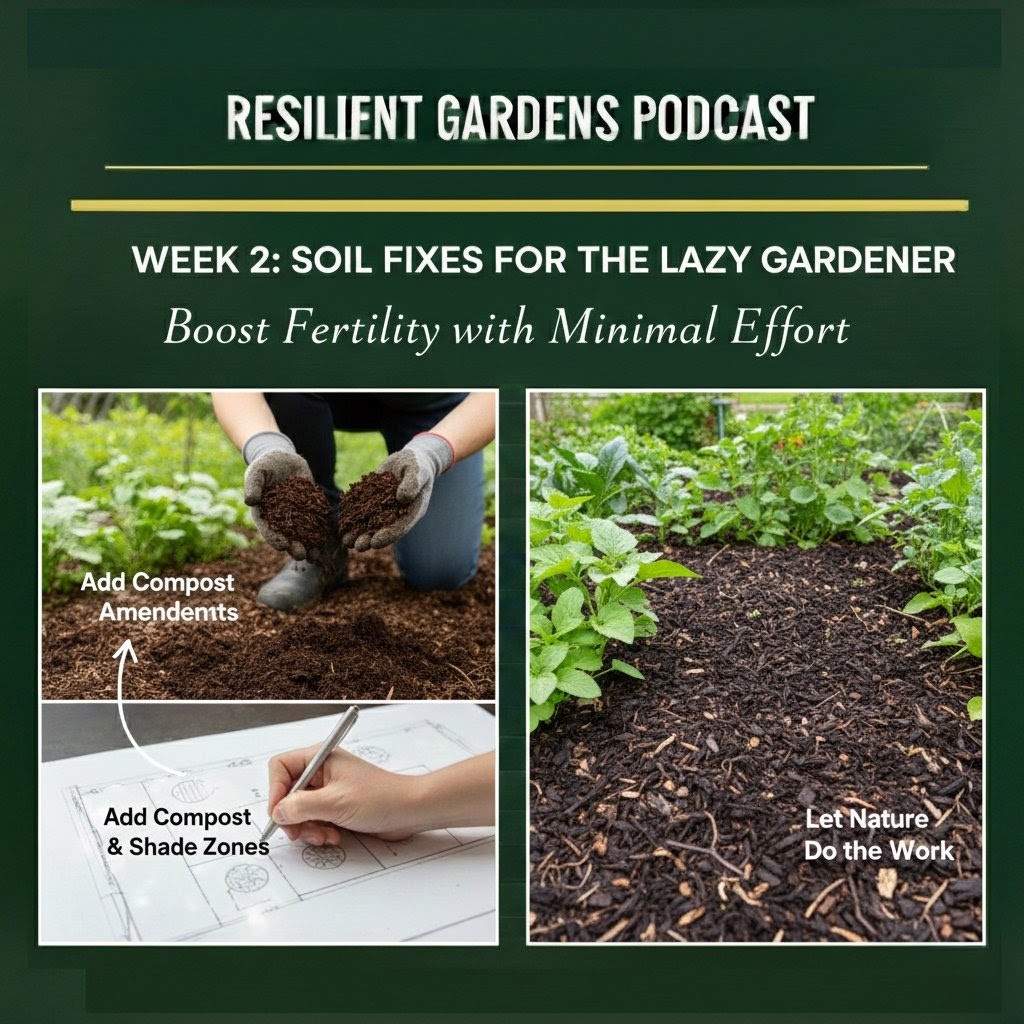
The “Lazy” Secret to a Climate-Proof Garden: Why You Should Stop Digging and Start Sponsoring Your Soil
The End of the “Back-Breaking” Era
In my 40 years as a horticultural consultant and a registered member of The Gardeners Guild, I’ve watched the British garden transition from a place of predictable seasons to a frontline in what I call “climate whiplash.” Last week, we looked at mapping your microclimates; this week, we are looking down. We are seeing a cycle of flash floods that turn lawns into bogs, followed immediately by parched heatwaves that bake the earth into a brick.
Traditionally, gardeners have been told to fight these extremes with more labor—more digging, more tilling, and more heavy maintenance. But at Morpheus Garden Care and Resilient Gardens, I teach a different path. If you were bracing yourself for a weekend of back-breaking toil, put the spade away. I advocate for the “Lazy Gardener” approach. We aren’t looking for a chemical quick-fix or an expensive, mechanical irrigation system. I often tell my clients: why spend thousands on plastic pipes that only treat the symptoms, when you can fix the system itself? The answer lies in building a “Soil Sponge.”
Your Soil Should Be a Sponge, Not Concrete
Most soil in the UK struggles with two extremes: compacted clay that acts like waterproof concrete, or tired, sandy earth that allows water to slip through like a sieve. Neither can survive the weather “whiplash” mentioned in our Week 1 mapping.
The “Science of the Sponge” relies on soil that is rich in organic matter and teeming with mycelium (fungal networks). When you shift the structural architecture of your soil, it begins to work for you:
- During a Flood: The sponge creates millions of tiny “macro-pores.” These allow heavy rainfall to sink deep into the earth immediately, preventing it from pooling at your home’s foundation or running off into the street.
- During a Heatwave: The sponge holds that moisture in an underground reservoir. Your plants stay hydrated naturally, long after the surface has dried to a crisp.
By focusing on the soil’s biology rather than mechanical irrigation, you are creating a self-sustaining system that manages water autonomously.
The Tilling Trap: Why Your Spade is Doing More Harm Than Good
For decades, the “old rules” commanded us to double-dig our beds every spring. After four decades in the field, I can tell you that this is the fastest way to destroy your garden’s resilience. Every time you turn the soil, you shatter the delicate fungal threads that transport vital nutrients. You also release stored carbon into the atmosphere and bring dormant weed seeds to the surface.
“The less you disturb the soil, the more it rewards you.”
The “Lazy Win” is significant: when you stop digging, you stop the cycle of inviting weeds back into your beds. You are preserving the underground infrastructure that nature has already spent years building.
The Cardboard & Compost “Sheet Mulch” Strategy
This is Week 2 of our transformation, so I want you to start gathering cardboard and sourcing high-quality compost immediately. To build your soil sponge without the manual labor, follow my “1-2-3 Action Plan” for a No-Dig foundation. This method mimics the forest floor, building soil from the top down.
- Clear and Flatten: Clear the surface of large debris, but leave the weeds exactly where they are. Simply flatten them down.
- The Cardboard Layer: Cover the area with plain, brown corrugated cardboard. Remove any plastic tape and, crucially, overlap the edges by 10cm to ensure no light reaches the weeds.
- The Compost Seal: Add a 5cm layer of high-quality compost directly on top of the cardboard.
Why it works: The cardboard starves the weeds of light, causing them to rot and return nutrients to the earth. Simultaneously, earthworms are drawn to the damp cardboard. They eat through it, tunneling between your new compost and the old soil. These worms become your “free labor,” doing all the necessary digging for you while you step back and have a cup of tea.
“Living Armor” and the Power of Chop-and-Drop
In my professional opinion, bare soil is a disaster. It bakes in the sun and washes away in the rain. To protect your sponge, you must apply “Living Armor.” If you aren’t planting into your 5cm compost layer immediately, cover it with straw or leaf mould. This keeps the sponge moist and cool, drastically reducing the time you’ll spend watering in July.
To maintain this armor efficiently, adopt “Zero-Waste Nutrient Cycling.” Instead of hauling bags of green waste to the tip—a total waste of your time and energy—use the Chop and Drop method. When you prune a non-diseased plant, simply chop the stems into small pieces and drop them directly onto the soil surface. This becomes your primary method for replenishing your “Living Armor,” feeding the soil the very nutrients the plant took from it.
Biological Drills: Let the Plants Do the Engineering
While the compost works from the top, you can integrate “Climate-Hero Plants” directly into your new beds to engineer the sponge from below. These are biological tools, not just ornaments.
- The Deep Miner (Symphytum officinale / Comfrey): This plant has a massive taproot reaching 2 to 3 metres deep. It “mines” minerals like potassium from the subsoil. Harvest the leaves and drop them on the surface to “supercharge” your sponge.
- The Nitrogen Fixer (Trifolium repens / White Clover): Why waste money on synthetic nitrogen fertilizer? White clover has a symbiotic relationship with bacteria on its roots that take nitrogen from the air and “fix” it into the soil for you.
- The Soil Breaker (Daucus carota / Wild Carrot): Also known as Queen Anne’s Lace, its sturdy roots act as biological drills. Sow these into your beds to penetrate tough UK clay, opening channels for air and water to reach the deeper layers of your sponge.
Conclusion: Trust the Underground
By switching to a No-Dig system, you are moving away from the “fix-it” mentality and toward building a biological fortress.
“The most important parts of your garden are the ones you can’t see.”
When the next flash flood hits, a resilient garden will simply “drink” the rain while your neighbors’ topsoil washes away. When the heat arrives, your plants will tap into the reservoir you built this week. Ask yourself: how will your garden handle the next weather extreme if you don’t choose to step back and let nature do the heavy lifting?