
Why Your Sprinkler is a “Double Failure” (And the 90% Water-Saving Hack You’re Missing)
Introduction: The “Human Sprinkler” Problem
We’ve all been there: the sun begins to dip, the air cools slightly, and the evening ritual begins. You stand in the garden, hose in hand, or watch the rhythmic arc of a mechanical sprinkler drenching your borders. It feels productive, almost meditative. But as a horticultural consultant with over 40 years in the dirt, I have to tell you—this isn’t gardening; it’s crisis management.
In an era of unpredictable weather, characterized by sudden heatwaves and flash floods, these “old rules” of hydration are a mere sticking plaster on a climate-stressed landscape. We’ve spent the last seven weeks in this series preparing your soil and selecting your plants; now, we must deliver the lifeblood. To do that effectively, we have to stop working against nature and start designing with it.
Standing there as a “human sprinkler” is a waste of your time and a precious resource. By moving from “top-down” to “bottom-up” hydration, you can cut your water waste by a staggering 90% while building a garden that actually thrives when the heat is on.
The Myth of the Healthy Sprinkler
In my work at Resilient Gardens, I often describe the overhead sprinkler as a “double failure.” Despite the visual satisfaction of seeing a spray of water glistening on your leaves—a sight many gardeners find hard to give up—it is the most inefficient habit you can have.
First, there is the atmospheric evaporation. In the height of summer, a massive percentage of that water evaporates before it ever touches the soil. Second, this method encourages the very things we want to avoid. Wetting the surface encourages shallow-rooted weeds to germinate, while soaking the foliage—especially in the evening—creates a damp microclimate that invites fungal diseases like powdery mildew. It is a surface-level solution that ignores what’s happening underground.
The “Stealth Move” of Sub-Surface Irrigation
The permaculture solution lies in “bottom-up” hydration using porous “leaky” hoses. This creates a precision system that delivers water exactly where the “soil sponge” can use it.
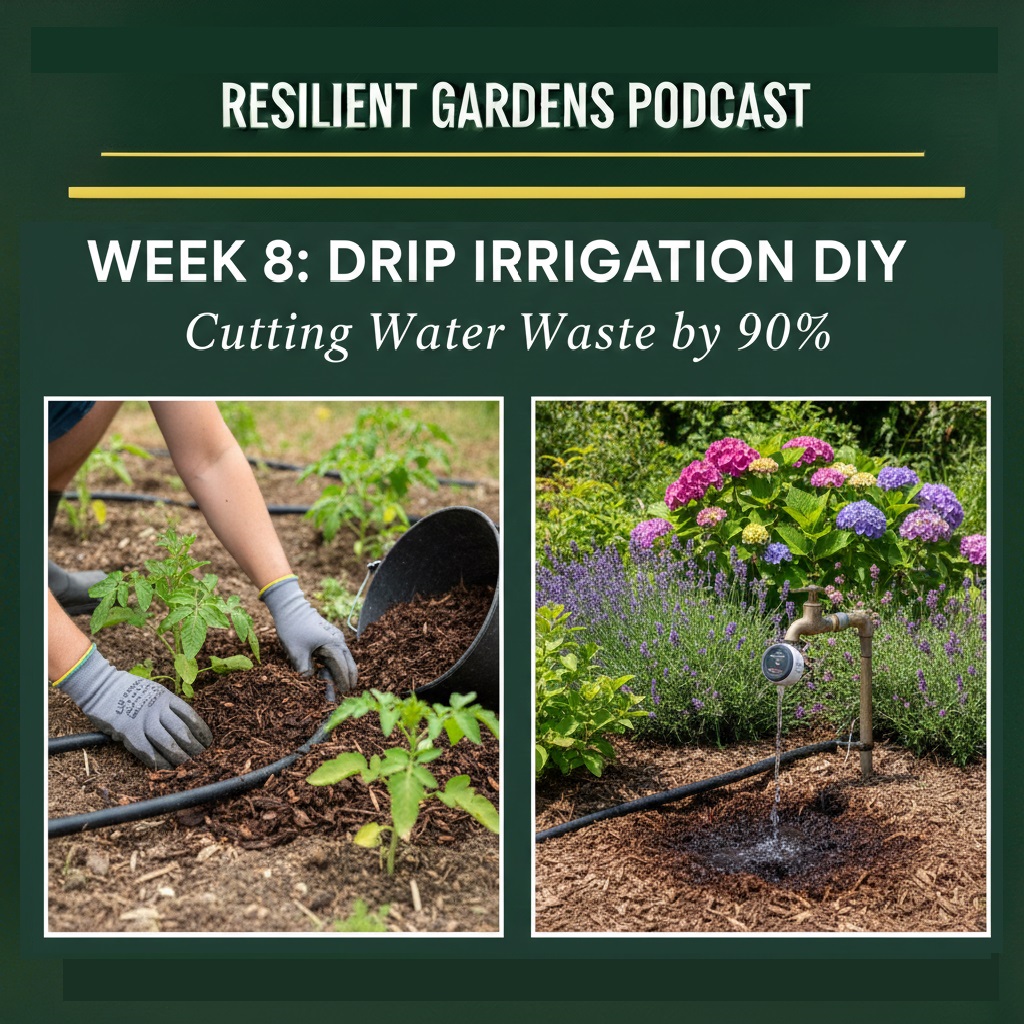
The “Stealth Move” I’ve refined over four decades is to snake these leaky hoses around the base of your most prized shrubs and perennials, securing them with landscape staples. But here is the professional secret: you must bury the hose under 5–10cm of mulch or a “Living Mulch.”
A Living Mulch consists of low-growing ground-cover plants that work in tandem with the hose to create a self-cooling ecosystem. Burying the hose isn’t just about tidying up; it prevents the hose itself from degrading in the harsh UV rays of the sun and ensures that 90% water-saving metric by eliminating runoff and evaporation entirely.
“By burying the hose, you eliminate evaporation entirely. The water ‘weeps’ directly into the earth.”
The 4:00 AM “Soil Sponge” Secret
Once your delivery system is hidden, we need to address timing. This is where we move from manual labor to automated resilient design.
The “Timer Trick” involves a simple, battery-operated water timer set to run at 4:00 AM. Why this specific hour? It’s about “soil tension.” At 4:00 AM, the lack of solar energy means the soil’s “pull” on water is at its most efficient. The “soil sponge” is most receptive at this time, allowing for deep, vertical absorption rather than just wetting the surface.
For those with elevated water butts, you can achieve a Gravity-Fed Connection. This is a zero-cost, no-electricity maintenance win. Simply turn the tap and let the natural pressure of the stored rainwater seep into your beds over the course of one hour. It is a silent, effective way to recharge your garden’s reserves.
Precision Hydration for the “Thirsty Trio”
While every plant appreciates consistency, the following “Thirsty Trio” will show the most dramatic results from a shift to drip irrigation:
- Rubus idaeus (Raspberry): These have notoriously shallow roots and hate drying out while the fruit is setting. A leaky hose at their base ensures juicy berries and prevents “grey mould,” which thrives when fruit is dampened by overhead watering.
- Hydrangea macrophylla: The name literally translates from the Greek for “water vessel.” These are the first to wilt when the heat rises. A drip system keeps them turgid and vibrant even through the hottest August afternoons.
- Solanum lycopersicum (Tomato): Whether in a border or a greenhouse, tomatoes require steady moisture. Inconsistent watering is the primary cause of “Blossom End Rot.” Drip irrigation provides the precision they crave to stay healthy.
Conclusion: From Crisis Management to Resilient Design
Making the switch to a drip system is more than a weekend DIY project; it is a shift in your philosophy as a gardener. You are moving away from the panic of the hose and toward a system of resilient design that quietly looks after itself.
Spend some time this week laying your leaky hoses and tucking them under a thick layer of mulch. Once the system is running, you can step away from the role of “human sprinkler” and reclaim your time.
Don’t water the garden; water the roots.
How will you transform your relationship with your garden this season? Will you keep chasing the heat with a hose, or are you ready to build a system that lasts?