
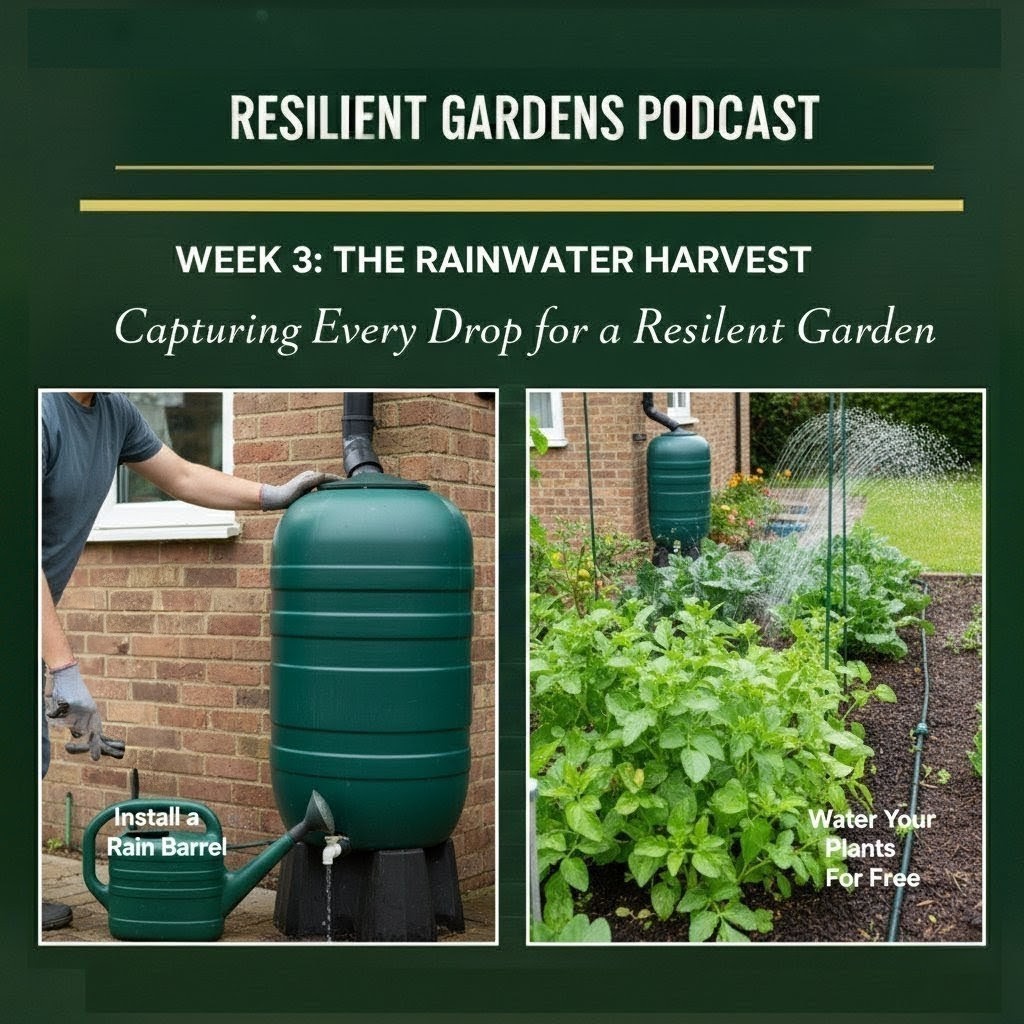
From Flash Floods to Flourishing Borders: Mastering the “Sky Harvest” for a Resilient Garden
In my four decades as a horticultural consultant and through my work as the founder of both Morpheus Garden Care and Resilient Gardens, I have watched the British gardening calendar shift from predictable rhythms to a volatile cycle of extremes. We are now living in an era of “all or nothing” weather—intense flash floods followed by punishing heatwaves. The old rules of gardening, developed in a more temperate time, simply don’t hold up under this pressure.
To build a garden that truly thrives today, we must look upward. I call this the “Sky Harvest.” It is the practice of capturing the soft, life-giving water that falls on our homes and using it to buffer our landscapes against the changing climate. By moving away from the tap and toward the clouds, you can turn your garden into a climate-resilient sanctuary.
Your Tap Water is a Chemical Cocktail
If you live in the UK, particularly in the South East, your tap water is likely “hard.” This means it is loaded with dissolved minerals like calcium and magnesium. While perfectly safe for us, these minerals—along with the chlorine used for treatment—can be detrimental to your soil health and plant vitality over time.
Rainwater is fundamentally different. It is naturally soft, slightly acidic, and contains beneficial trace elements absorbed from the atmosphere. When you rely on tap water, you risk altering your soil’s pH and leaving unsightly lime deposits on foliage. Rainwater provides the perfect pH balance that most plants crave, leading to a significant boost in health without the hidden costs of chemical treatment.
“Water is our most precious resource, and we’re getting it in all the wrong ways.”
To help you transition to a more sustainable system, I’ve developed the ResilientGardens 1-2-3 Action Plan. This framework is designed to maximize your efficiency—what I like to call the “lazy gardener” approach—while ensuring your garden remains lush and productive.
1x Structural Focus: Your Roof as a High-Performance Reservoir
The first step in our plan is to recognize that your home is your primary collection surface. We often view our roofs merely as shelter, but in a resilient garden, the roof is a powerhouse of potential. A standard semi-detached house in the UK can collect hundreds of litres of water from even a moderate rain shower.
To tap into this resource, you must focus on your home’s infrastructure. My recommendation is to install rainwater butt diverters on every accessible downpipe. For maximum resilience, link multiple butts together to create a massive storage capacity. This setup does more than just provide free, high-quality water; it performs a vital civic duty. By capturing runoff, you reduce the strain on local storm drains and help mitigate the localized flooding that often follows heavy bursts of rain.
2x Maintenance Wins: The “Lazy” Harvester’s Strategy
Efficiency is the hallmark of a resilient garden. By performing a few simple maintenance tasks now, you prevent major headaches and physical labor later in the season. These two “wins” ensure your system remains clean and effective.
- Win #1: The Gutter Guardian. Neglected gutters filled with moss and leaves are the primary cause of harvesting failure. I advise my clients to clean their gutters twice a year—once in late autumn after the leaves fall and again in mid-spring. To make this even easier, install simple mesh or foam gutter guards. This small investment significantly reduces cleaning time and ensures a consistent flow of water.
- Win #2: The First Flush Bypass. The first few minutes of rain wash away bird droppings, dust, and pollutants from your roof. Installing a “first flush” diverter channels this initial dirty water away from your butts. This ensures your stored water remains clean, reducing bacterial build-up and extending the life of your watering cans and irrigation equipment.
3x Climate-Hero Plants: Nature’s Purest Feed
While every plant prefers rainwater, there are three specific “Climate-Heroes” that demonstrate why soft water is essential for garden health. These plants often suffer from “pH lockout” when given tap water—a condition where the high pH of the water prevents the plant from absorbing the nutrients already present in the soil.
- Camellia japonica: These acid-loving beauties often struggle with the minerals in hard water. Rainwater ensures they flourish with vibrant blooms and glossy evergreen leaves without nutrient interference.
- Vaccinium corymbosum (Blueberry): Blueberries are highly susceptible to chlorosis (yellowing leaves) when fed tap water. Rainwater is the natural solution for a healthy, abundant harvest of berries.
- Iris pseudacorus (Yellow Flag Iris): This is a champion of “Drown Zones”—areas of the garden specifically designed to handle temporary flooding or pond margins. This plant acts as a natural filter, cleaning excess nutrients from your rainwater storage areas while providing beautiful floral interest.
A Reservoir of Resilience
Investing in a rainwater harvesting system is one of the most impactful changes you can make as a gardener. It protects your wallet from rising water costs, provides your plants with the purest possible nutrition, and helps protect your local environment from the extremes of flash flooding and drought.
“Every drop of rain that falls on your roof is a resource, not a problem.”
As we look toward the next season of unpredictable weather, I want to leave you with a question: Is your garden ready to catch the next storm, or will that resource simply wash away?
Start your journey toward a more resilient landscape by checking your gutters this weekend. Your plants—and the planet—will thank you for it.