
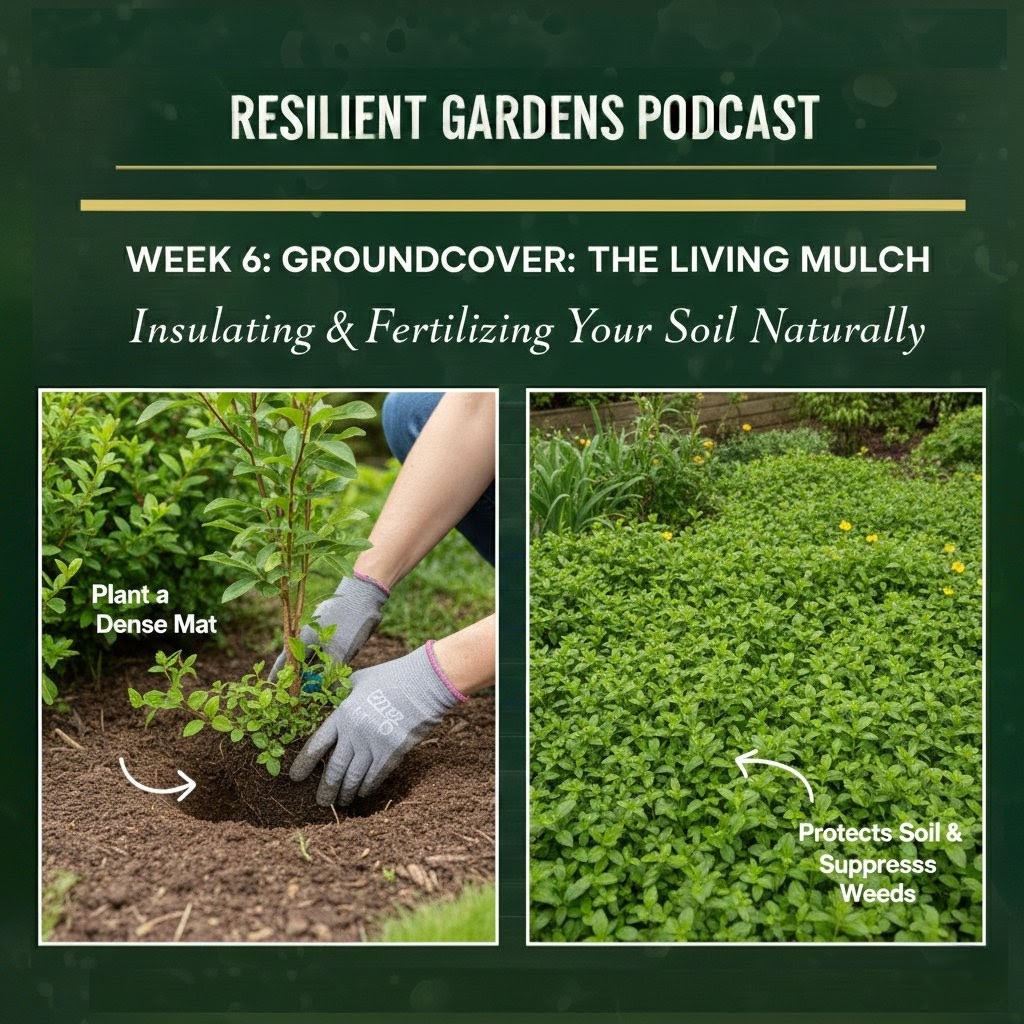
Stop Cooking Your Soil: Why “Living Mulch” is the Secret to a Resilient, Weed-Free Garden
In many UK gardens, a common sight is the “neat” appearance of plants separated by vast stretches of bare earth or woodchips. While this look is traditional, I’m here to tell you it is the “Achilles’ heel” of garden design. Leaving soil exposed creates a vulnerability that invites invasive weeds and rapid evaporation. We have spent the last five weeks building the infrastructure of a resilient garden—from mapping microclimates to mastering the “Right Hole” planting technique—and this week, we address the most critical gap in your defense.
My name is Graeme Farrer. With 40 years of experience as a horticultural consultant, permaculture designer, and a registered member of The Gardeners Guild, my mission at Resilient Gardens is to help you move beyond outdated rules. In an era of unpredictable weather, we must build outdoor spaces that can handle flash floods and heatwaves with ease. The primary solution is the “Living Mulch”—a biological cooling system that protects your garden’s foundation. At ResilientGardens.co.uk, we have a golden rule: “Nature abhors a vacuum, and she hates being naked.”
Your Bare Soil is a Microbe Oven
When soil is left “naked,” it suffers under the sun. On a hot July day, bare soil can reach temperatures ten degrees higher than the air temperature around it. This intense heat effectively “cooks” the beneficial microbes we worked so hard to cultivate in Week 2 and destroys the “soil sponge” required to hold onto water.
Gardeners often view bare earth as a sign of a “neat” garden, but in reality, these patches are biological deserts. We must change our perspective and recognize that a healthy ecosystem requires total coverage. By transitioning to a “Living Mulch” system—a dense layer of low-growing groundcover—you are installing an insulating blanket that keeps the soil cool and retains moisture.
The “Green Weave” – Part of Your 1-2-3 Action Plan
To eliminate bare patches, you must identify every “dead zone” in your garden—the gaps between shrubs, the edges of paths, and those awkward paving cracks—and fill them with intent. This is the “Green Weave” transition.
Your first structural focus is hardscaping. Get down on your knees and dig out the weeds and moss from the gaps between your patio slabs or path stones. While moss is green, it doesn’t provide the same structural resilience or transpiration-cooling as the specialists we use. Replace that organic waste by “tucking in” resilient, creeping herbs. This transforms a “Scorch Zone” (heat-radiating stone) into a functional cooling feature. These plants transpire moisture, actively lowering the ambient temperature of your seating areas while preventing invasive weeds from taking hold.
The 20% Rule to “Fire” Yourself from Weeding
One of the most effective maintenance wins is the “Tight Spacing” strategy. When planting groundcover, ignore the standard spacing instructions on the label and plant your specimens 20% closer together than recommended.
This approach ensures the garden reaches “canopy closure” much faster. When the groundcover forms a solid mat, it keeps the soil in total darkness. This effectively “fires” you from your weeding duties because weed seeds simply cannot germinate in the dark. By shifting from a traditional layout to this high-density system, you allow the garden to function as a self-regulating ecosystem rather than a chore.
Using Your Feet as a Soil Health Sensor
A resilient garden should be a sensory experience that also provides data. By using aromatic, “steppable” groundcovers like Chamomile or Thyme in high-traffic areas, you create what I call a “Step-On Indicator.”
There is a dual benefit here: the garden smells incredible every time you walk through it, and the plants act as a vital early-warning signal. These plants are remarkably tough, but if they begin to look “flattened,” it is a functional data point indicating that the soil in that area is becoming too compacted. This signal tells you exactly when the area needs a quick aerating to prevent permanent damage to the soil structure.
The “Big Three” Climate-Hero Specialists
To build a successful living mulch, you need specialists that can handle being baked in the sun and occasionally stepped on.
- The Scented Specialist (Creeping Thyme): Thymus serpyllum is the king of paving gaps. It is extremely drought-tolerant, loves “Scorch Zones,” and thrives on neglect in poor soil. It produces a carpet of purple flowers that bees adore.
- The Succulent Shield (Sedum spurium): These are the ultimate “Lazy Gardener” groundcovers. Their fleshy leaves store water like a camel, making them immune to heatwaves. They spread quickly to form a thick, rubbery mat that stops evaporation in its tracks.
- The Shade Survivor (Sweet Woodruff): Galium odoratum is the hero for “Drown Zones” or “Rain Shadows” under trees. It survives in the dry, dark spots where other plants fail, creating a lush green carpet that smells like freshly cut hay.
Closing the Gaps
Transitioning from traditional mulch to living mulch is essentially “finishing the skin” of your garden. By closing the gaps, you protect the life beneath the surface and ensure that every drop of water you harvested in Week 3 stays exactly where it belongs—in the roots.
As the saying goes, “If you don’t plant something, nature will.” Take a moment this week to scout your garden for bare earth. What are those bare patches currently inviting into your landscape? Get down on your knees, clear the weeds, and tuck in some Thyme or Sedum. Your future self—the one sitting in a cool, weed-free garden next summer—will thank you.