
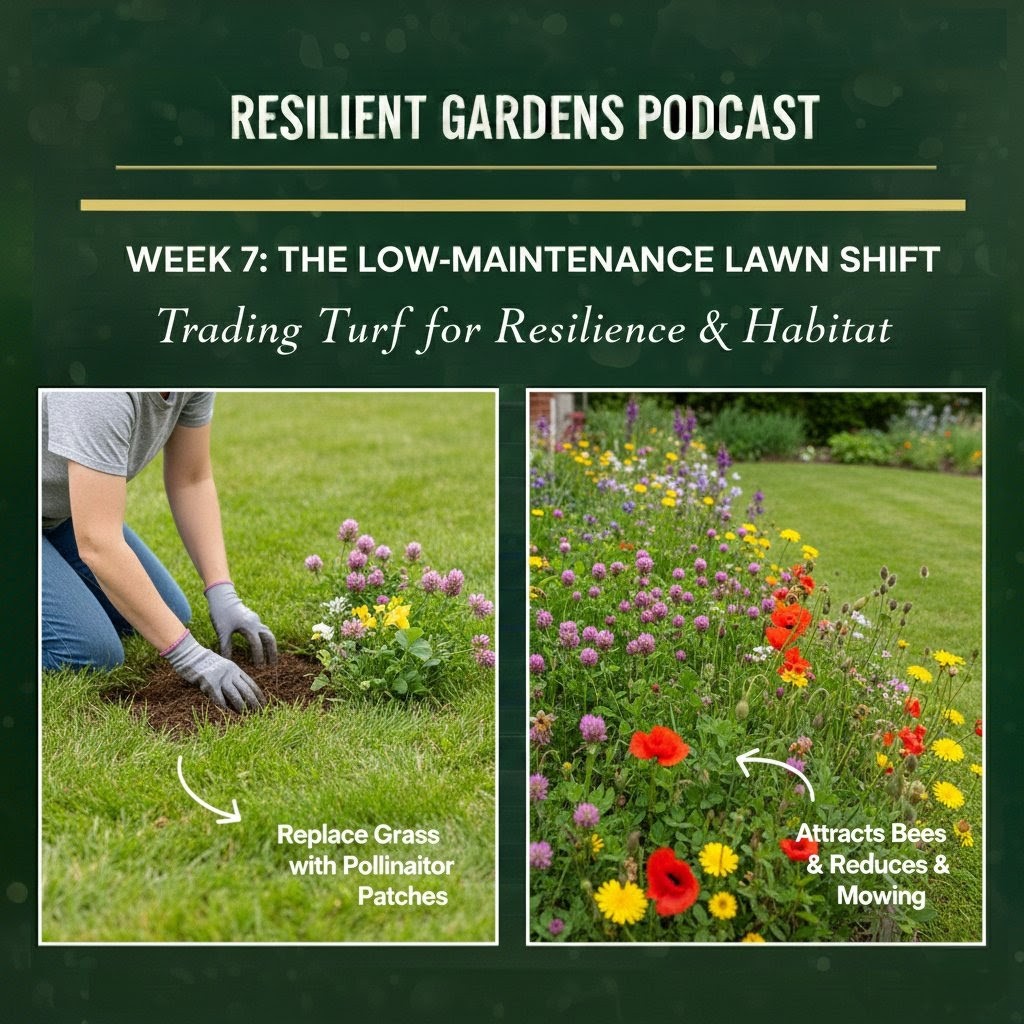
Beyond the Bowling Green: Why Your Lawn Needs to Get “Smarter” to Survive a Scorching Summer
For over forty years, I have watched British summers from the soil up. As a horticultural consultant, permaculture designer, and a registered member of The Gardeners Guild, I’ve seen the “perfect” lawn transition from a source of pride to a significant liability. We’ve been conditioned to believe that a beautiful garden requires a “bowling green”—short, striped, and obsessively manicured. But as the founder of Resilient Gardens, I can tell you that those old rules are failing us in the face of our increasingly volatile climate.
Traditional lawns have become what I call a “hydration desert.” They are high-maintenance, thirsty, and fragile. However, my mission isn’t to convince you to dig up your grass; it’s to teach you how to make it smarter. By shifting our perspective from high-input to high-resilience, we can transform a struggling patch of turf into a drought-defying carpet that stays vibrant long after the neighbors’ lawns have turned to dust.
The Scalping Trap: Why Your Weekly Cut is Killing Your Roots
One of the most persistent myths I encounter is the idea that “mowing it short” saves time. In reality, this practice—which I call “scalping”—is the quickest way to kill a lawn during a heatwave. There is a direct, unbreakable biological link between the height of the grass and the depth of its roots.
When you scalp your grass, the plant is forced into an emergency state, pouring every ounce of its energy into growing new blades just to survive. This leaves nothing for the root system. Short grass leads to shallow roots. Think of your lawn as a house: it needs “headroom” to protect its “basement.” Without that protective canopy of green, the soil surface is exposed to direct sunlight, leading to rapid evaporation and that distinctive, ugly cracking of the earth. By cutting too short, you are effectively destroying the cooling system that keeps the “basement” of your garden alive.
The 5cm Rule: Engineering Your Own “Soil Sponge”
The most transformative change you can make this season requires no expensive equipment—it only requires an adjustment in the garden shed. My first piece of advice is simple: raise your mower blades. Set them to their highest setting, aiming for at least 5cm (2 inches).
By allowing your grass to reach this height, you are encouraging the roots to dive deeper into what we call the “Soil Sponge.” This is the capacity of healthy, organic-rich soil to capture and hold every drop of water it receives.
“The mower is a tool, not a weapon.”
When you leave the grass at 5cm, the blades provide enough shade to keep the soil surface cool, while those deeper roots access moisture that shallow-cut grass simply cannot reach. You aren’t just growing grass; you are building a biological insurance policy against the next heatwave.
The Art of “Lazy” Maintenance: Why Less Really is More
Resilience often comes from doing less, not more. I advocate for two specific “maintenance wins” that reduce your workload while drastically improving turf health.
1. Grass Recycling (Mulch Mowing) I want you to take the collection bag off your mower and leave it in the shed. By leaving the clippings on the lawn, you are providing a “mini-mulch.” These clippings break down quickly, returning vital nitrogen to the soil and acting as a thin layer of insulation to prevent evaporation. It is quite literally free fertilizer, and it saves you the back-breaking work of emptying bags.
2. The “Brown is OK” Mindset During a severe drought, the best thing you can do for your lawn is to stop watering it. Established grass is remarkably clever; it enters a state of dormancy, turning brown to protect its crown. Many gardeners try to fight this by using tap water, but this is a mistake. Cold tap water during a drought “shocks” the plant, disrupting the natural survival cycle it has already entered. A high-cut, deep-rooted lawn is built to survive this; once the rains return, it will bounce back with far more vigor than a lawn that has been pampered and “shocked” all summer.
Beyond Ryegrass: Introducing “Resilience Blends”
If you are looking to over-seed or establish a new area, I recommend moving away from the “Ryegrass monopoly” and looking toward what I call Resilience Blends. These are combinations of plants naturally equipped for the modern UK climate:
- The Deep Diver (Tall Fescue): Festuca arundinacea is a powerhouse. Unlike standard grass, its root system can reach down over a meter into the earth, staying green when everything else has given up.
- The Nitrogen Fixer (Micro-clover): Trifolium repens is a game-changer. It stays green during the peak of summer, pulls nitrogen from the air to feed your grass for free, and provides essential forage for our struggling pollinators.
- The “Steppable” Scent (Chamomile): For paths or smaller lawns, Chamaemelum nobile is a delight. It requires almost no mowing, thrives in the heat, and releases a wonderful scent every time you walk upon it.
A Buffer Against the Extremes
Moving from a high-input lawn to a high-resilience one isn’t just about aesthetics; it’s about creating a garden that works with nature rather than fighting it. By raising your blades and embracing a bit of height, you’ll spend less time working, less money on chemicals, and you’ll enjoy the greenest lawn on the street when the sun starts to bake.
Next time you reach for the mower, ask yourself: am I grooming my lawn for my neighbors’ approval, or for the earth’s survival? It might be time to let it grow.