
Why Your Daily Watering Habit Is Killing Your Garden (And How to Fix It)
The Myth of the “Tea-Time Sprinkle”
For many gardeners, the “tea-time sprinkle”—that gentle, daily ritual of giving the flowerbeds a quick splash with the hose—is a peaceful end to the day. It feels like a kindness, a bit of well-meaning pampering for your plants. However, in my 40 years of experience as a horticultural consultant and a registered member of The Gardeners Guild, I have seen how this specific habit creates a dangerous cycle of dependency.
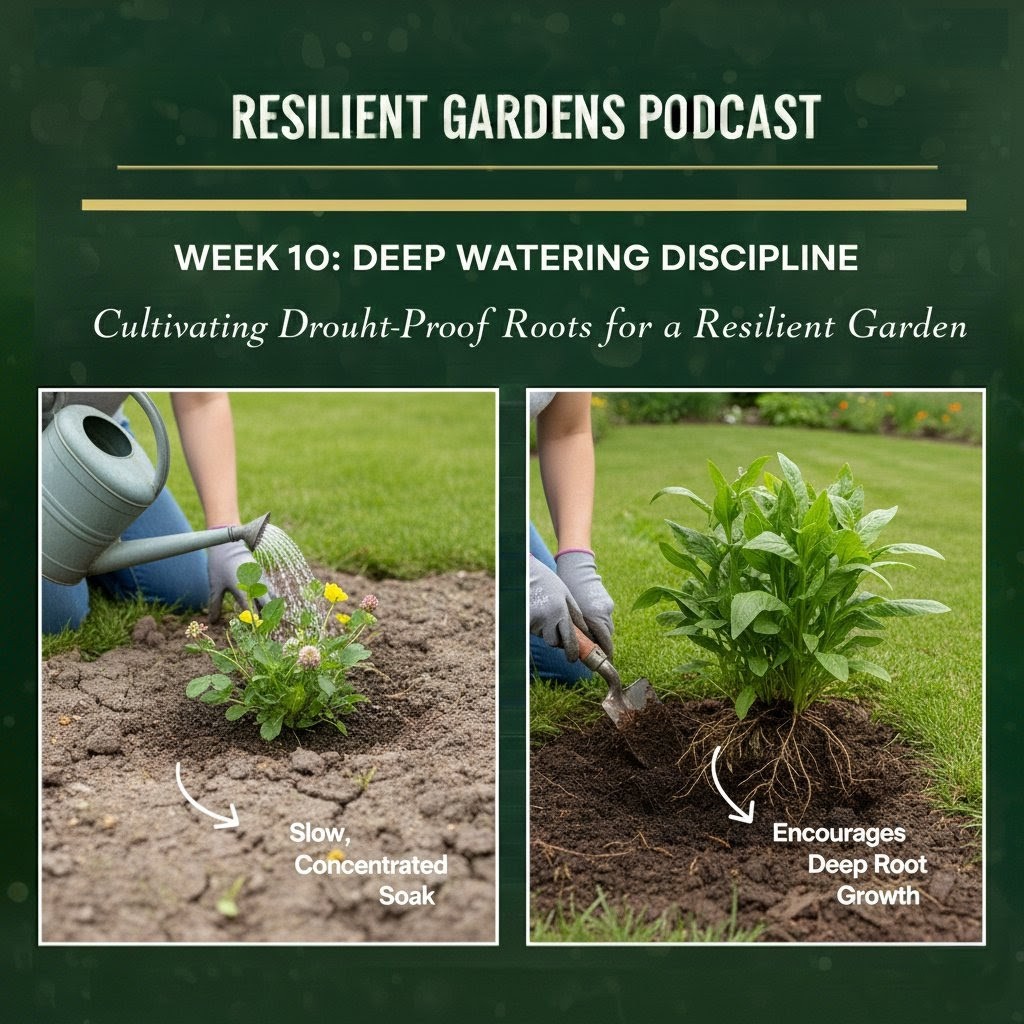
The old rules of gardening are changing. We have already built our “soil sponge,” harvested the rain, and laid our drip lines. Now, we must address the “how” of watering. At ResilientGardens.co.uk, I see the same mistake every summer: the quick splash. By giving your plants a daily “sip,” you are inadvertently “addicting” them to your presence. This week—Week 10 of our resilience journey—is about Deep Watering Discipline. We are moving away from the daily ritual and toward a strategy that trains your plants to be independent, ensuring they don’t wilt the moment you go on holiday or a heatwave hits.
The Addiction Cycle: Why Surface Watering Fails
The failure of daily surface watering lies in basic plant biology. When you water for only two minutes a day, the moisture typically only penetrates the top centimeter of soil. Because plants are opportunistic, their roots will grow only where the water is available. This results in a shallow root system that clings to the surface.
This is a strategic mistake for a resilient garden. The surface is the first part of the garden to bake dry and “cook” under the sun’s heat. If you miss even a single day of watering during a heatwave, those shallow, vulnerable roots are exposed to extreme temperatures, causing the plant to collapse. By watering a little bit every day, you are essentially training your plants to be fragile and addicted to your intervention. To build a garden that survives the UK’s increasingly unpredictable weather, we must stop pampering the surface and start challenging the roots to dive.
3. The ResilientGardens 1-2-3 Action Plan
To break the cycle of dependency, you must reprogram your habits using this three-part framework.
1x Structural Focus: The “Deep Soak” Schedule
Your primary goal this week is to overhaul your watering schedule to focus on depth rather than frequency.
- The Action: Stop the 2-minute daily sprinkle. Switch to 20 minutes of deep watering, performed only once or twice a week (depending on the intensity of the heat).
- The Goal: You want the water to sink at least 15–20cm into the ground.
- Why it Works: By delivering a massive volume of water less often, the surface is allowed to dry out while the deeper layers of the “soil sponge” remain moist. This forces the roots to “dive” deep into the earth to find that reservoir. These deep roots are naturally insulated from surface heat, allowing your plants to tap into a hidden moisture “bank” long after the topsoil has turned to dust.
2x Maintenance Wins: The “Finger Test” and the “Evening Lock”
These two wins ensure your deep watering is as efficient as possible, preventing waste and maximizing root growth.
Win #1: The Knuckle Check Resilience-building requires resisting the urge to water based on a calendar. Instead, perform the “Knuckle Check.” Push your finger into the soil up to the second knuckle. If the soil feels moist at your fingertip, do not water—even if the surface looks bone-dry. This discipline encourages the plant to continue searching deeper for moisture, strengthening its root system and its overall independence.
Win #2: The Post-Sunset Lockdown Efficiency is key to maintaining your underground moisture bank. Always water in the late evening or very early morning. By watering when the sun is down, you prevent up to 50% of your water from being lost to evaporation. This “lockdown” ensures that 100% of your water—and your harvested rainwater—actually reaches the roots where it is needed most.
3x Climate-Hero Plants: The Self-Sufficient Survivors
Choosing the right plants simplifies the journey toward a self-sufficient outdoor space. Once trained with deep watering discipline, these three “Climate-Heroes” become almost entirely independent in the UK climate:
- The Sun-Seeker: Echinacea purpurea (Coneflower): These plants possess deep taproots. Once you have trained them to find water at lower levels, they will stand tall and vibrant in full sun for weeks without a drop of extra help.
- The Silver Shield: Stachys byzantina (Lamb’s Ear): This plant features fuzzy leaves that reflect heat. It also serves as the perfect “indicator plant”; because it is an expert at finding deep moisture, if you see this plant wilt, you know it is truly time for a deep soak.
- The Mediterranean Master: Rosmarinus officinalis (Rosemary): A native built for drought. While surface over-watering causes rosemary to rot, deep, infrequent watering allows it to develop a woody, resilient root system capable of surviving the harshest summers.
The Philosophy of the “Lazy Gardener”
The path to a resilient garden requires a shift in mindset. We must move away from constant pampering and toward a disciplined approach that values long-term strength over short-term appearance.
“A lazy gardener makes a hard-working plant.”
I challenge you to spend the coming week resisting the urge to reach for the hose every evening. Let the surface dry out and trust the soil sponge we have built together. Your plants will be stronger, deeper, and more resilient because of it. As our climate continues to change, ask yourself: is your garden built to survive on its own, or is it addicted to your presence?