
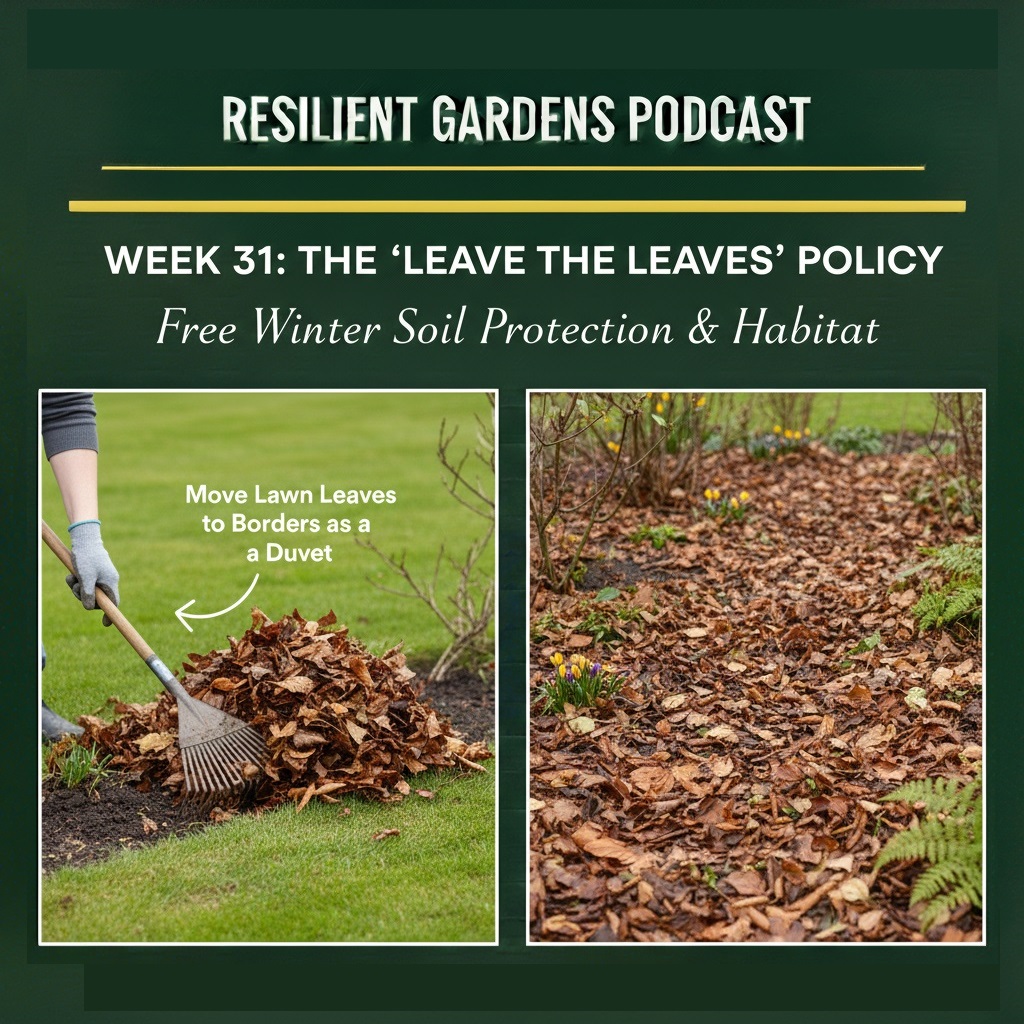
Stop Cleaning Your Garden: Why Your “Litter” is Actually a Winter Coat
As we move into Week 31 of our seasonal management program, a familiar, discordant roar begins to fill our neighborhoods: the sound of leaf blowers. It marks the start of the annual “cleanup,” where gardeners scramble to banish every fallen leaf as if they were dealing with hazardous waste.
In my forty years of walking through gardens—from my early days at Morpheus Garden Care to my current work at Resilient Gardens—I’ve seen how this obsession with tidiness can inadvertently sabotage a landscape. At Resilient Gardens, we don’t see fallen foliage as litter; we see it as a gift. Shifting toward a “Leave the Leaves” policy isn’t just about changing your weekend chores; it’s about a fundamental shift in mindset. It’s the difference between seeing your garden as a static painting and seeing it as a living, breathing “Soil Sponge” that needs protection to thrive through the climate extremes of the coming years.
The “Bare Earth” Danger: Why Neatness is Killing Your Soil
In a truly resilient ecosystem, Mother Nature rarely leaves the ground naked. She hates a vacuum. Yet, many gardeners insist on stripping their soil bare during the most punishing months of the year. This creates what I call the “Bare Earth” danger.
When soil is exposed, it loses its vital structure. The “Soil Sponge”—that intricate, porous architecture built by billions of microscopic fungi and bacteria—literally collapses when it dries out or is battered by rain. Without a protective layer, heavy winter downpours wash away nutrients, while frost “heaves” the earth, physically snapping the delicate root systems of your prized perennials.
I often tell my clients one thing above all else:
“A tidy garden is often a starving garden.”
I understand the psychological hurdle here. We feel a societal pressure for “curb appeal”—the idea that a clean, dark-earthed border is the hallmark of a “good” gardener. But this aesthetic of neatness is a biological trap. By stripping away organic cover to satisfy a sense of order, we are effectively starving the microbes that make the soil work for us.
The 5-10cm Winter Duvet: Strategic Placement
Embracing the leaves is not a license for neglect; it is a strategy of targeted deployment. As part of our Week 31 framework, we treat leaves as a “free winter duvet.” The goal is to move the resource from where it causes trouble to where it performs miracles.
The Action Plan: Don’t just let leaves sit where they fall. Rake them off your lawns and pathways—where they can suffocate the grass and encourage moss—and spread them 5–10cm deep across your flower borders and tucked under hedges.
The Three-Fold Protection:
- Erosion Control: The leaf layer acts as a biological shock absorber, shielding the soil surface from the compacting force of winter rain.
- Temperature Insulation: This organic blanket keeps the ground warmer, allowing soil microbes to stay active longer into the winter, which keeps the “Soil Sponge” healthy and aerated.
- Moisture Retention and Breathability: Leaves prevent the dreaded “Soil Capping.” This is when the surface of exposed soil forms an impenetrable crust that prevents the earth from “breathing” or “drinking.” By preventing this cap, you ensure the soil is ready to absorb water during next summer’s inevitable dry spells.
The No-Bagging Victory: Reclaiming Time and Money
Adopting this policy is a “lazy win” for the gardener who wants better results with less effort. Why work harder to achieve a worse outcome?
- The Financial Win: Stop spending your hard-earned money on plastic garden waste bags and avoid municipal fees. You are keeping high-quality carbon and minerals on-site rather than paying someone to haul your fertility away.
- The “Security Detail”: I like to think of beneficial insects as your garden’s private security team. Ladybirds, ground beetles, and lacewings provide free pest control, but they will only stay on your property if they have a place to overwinter. A leaf mulch provides the “barracks” they need. By avoiding the “clean” aesthetic, you reduce the need for synthetic chemicals in the spring, keeping your natural security detail safe and on the job.
Not All Leaves Are Equal: The Premium Mulch Makers
While all organic matter is useful, some trees are “Climate-Hero” species because of the specific quality of the mulch they provide for your soil sponge.
- Silver Birch (Betula pendula): The Fast-Tracker Birch leaves are the sprinters of the decomposition world. Because they are small and thin, they break down incredibly quickly. I often find they’ve completely integrated into the soil by mid-spring, providing a rapid-release nutrient boost right when your plants are waking up.
- Beech (Fagus sylvatica): The Soil Builder Beech leaves are the marathon runners. They are tough and structurally durable, resisting decay. This makes them the ultimate “winter coat” because they will stay in place and protect the soil surface well into May, ensuring the ground stays moist as the spring sun begins to bite.
- Apple and Fruit Trees (Malus): The Orchard Hero Rich in minerals, these leaves are perfect for your “Edible Resilience” beds (which we discussed back in Week 20). Expert Tip: Only use these if they are free from heavy fungal diseases like scab. If the leaves are healthy, they are a mineral goldmine for your fruit-producing areas.
Conclusion: Choosing Resilience Over Aesthetics
Building a garden that can survive 2027 and beyond requires us to prioritize ecology over a misguided sense of “neatness.” The “lazy” gardening you do this weekend—simply raking leaves into your borders instead of bagging them—is a profound investment in the future health of your land.
I want you to audit your success not by how clean your borders look, but by how much life is teeming beneath the surface. As a steward of your own “Soil Sponge,” will you choose a garden that is starved for the sake of appearances, or one that thrives under its natural winter coat?