
The Three-Month Bloom: Why Your 2027 Garden Success Depends on This One Vertical Secret
In my four decades of getting my hands dirty across British gardens, I have seen the “old rules” of horticulture rewritten by an increasingly volatile climate. As a member of The Gardeners Guild and the founder of Resilient Gardens, I’ve watched too many gardeners deal with the heartbreak of a “flash in the pan” spring—where a few warm days force every bulb to bloom at once, only for the display to vanish in a week. Even worse is the silent failure of bulbs rotting in the ground, victims of the unpredictable winter deluges that now characterize our “new normal.”
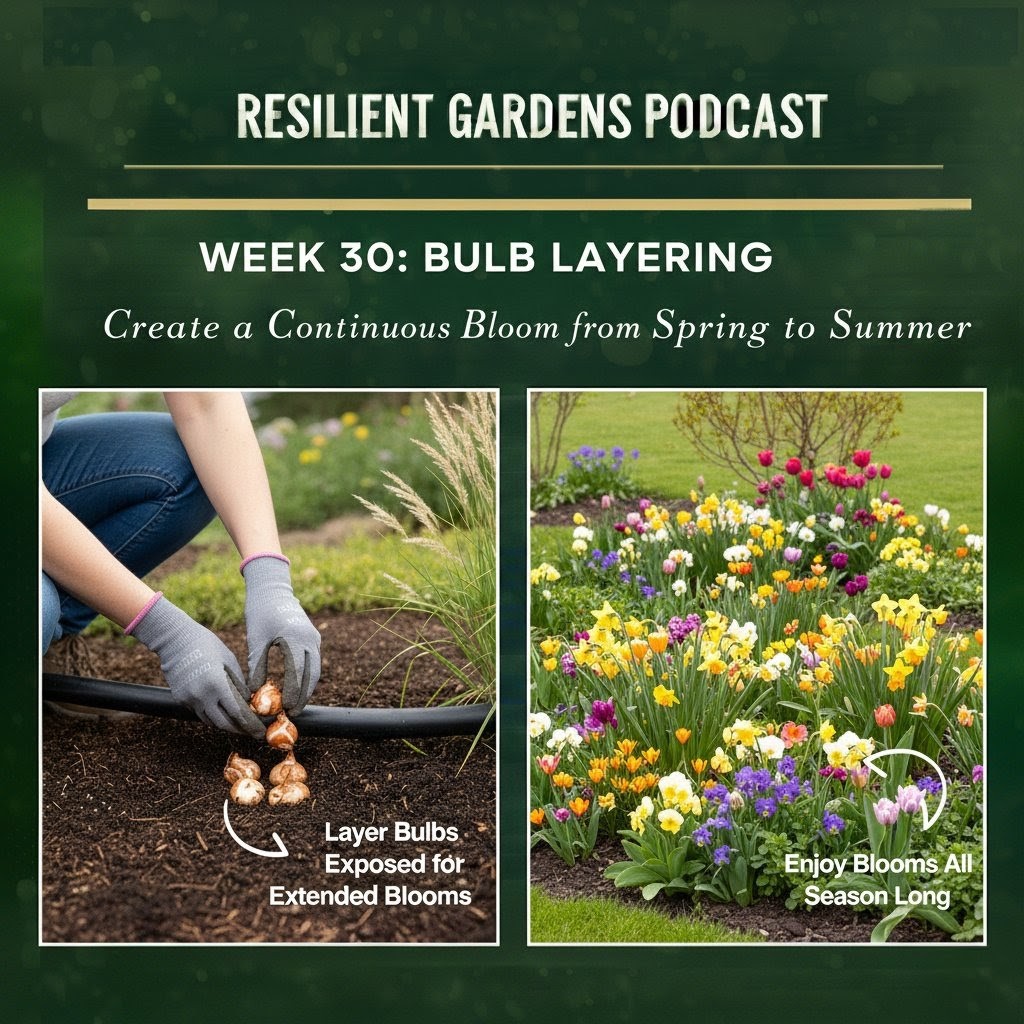
We are currently in Week 30, a critical window of seasonal urgency. At Resilient Gardens, our mission is to build landscapes that don’t just survive but thrive through flash floods and heatwaves. To do that, we have to stop planting for the moment and start planting for the future. By using what I call the “Lasagna Method,” you are essentially creating a pressurized “time capsule” in your soil—a high-efficiency vertical column that guarantees your garden will be the first and most enduring to wake up when 2027 arrives.
The Permaculture Shift: Dominating the Vertical Column
In a resilient garden, space is our most precious resource, and how we manage it defines our success. Most traditional guides tell you to plant bulbs side-by-side, which is a horizontal waste of potential. Applying Permaculture principles means we look to maximize yield from every single input. We shift our perspective from the surface to the “vertical column” of the soil.
By layering bulbs at varying depths based on their specific biological clocks, we turn a single pot or a square foot of border into a self-refreshing engine of growth. This vertical layering allows us to stack functions: we aren’t just planting flowers; we are engineering a continuous succession. This high-efficiency technique ensures that every square inch of your “soil sponge” is working for you throughout the entire spring season, rather than sitting dormant for eleven months of the year.
The Anatomy of a Floral Time Capsule: Three Layers of Succession
The secret to a three-month explosion of color lies in the logic of the stack. You must choose “ingredients” that respect the sequence, ensuring that as one star takes its bow, the next is already waiting in the wings.
- The Bottom Layer (The Deep Foundation): Here, we place the late-season showstoppers like Tulipa ‘Queen of Night’. Because they are planted deepest, they have the physical protection they need to develop strong, heat-tolerant stems that will carry those iconic maroon-black blooms into the warmth of May.
- The Middle Layer (The April Anchor): This is the home for mid-season workhorses like Narcissus ‘Tête-à-tête’. They act as the vital bridge, filling the “April gap” when the garden is most at risk of looking sparse.
- The Top Layer (The Early Scouts): We finish the stack with Crocus tommasinianus. These are the vanguard, often pushing through the frost as early as February to signal the end of winter.
One of the greatest professional “cheats” of this method is the aesthetic transition: as each layer finishes its cycle, the emerging growth of the layer beneath rises up to physically hide the fading, yellowing leaves of its predecessor. You get all the biological benefits of leaving foliage to die back naturally without any of the mess.
“Winter is just a long night; spring is the reward for those who prepared.”
Engineering the Soil Sponge: Two Essential Maintenance Wins
Selection is only half the battle; the other half is structural engineering. Even the finest bulbs will fail if they are drowned by winter wet. To protect your investment against modern climate challenges, I insist on two specific “Maintenance Wins” for every Lasagna build.
Win #1: The Drainage Grating. Before a single bulb goes in, place a 1cm layer of horticultural grit at the very bottom of your planting hole or pot. This acts as a physical “grating” that prevents “bulb rot.” It ensures that even during a flash-flood event, water cannot sit against the base of the bulb, which is its most vulnerable point.
Win #2: The Sponge Protection. Forget standard multipurpose compost. You need a high-quality peat-free foundation mixed with 20% grit. This creates a free-draining “soil sponge” that retains just enough moisture for healthy root development while allowing excess winter rain to pass through rapidly. This is how we climate-proof the garden for the unpredictable months ahead.
The Staggered Specialists: Selecting Your Climate-Hero Plants
In my consultancy work, I recommend “Climate-Hero” species that possess the tactical advantages needed to handle the elements.
- Crocus tommasinianus: These aren’t just pretty faces; they are a vital life-line. As one of the toughest early scouts, they provide an essential early nectar source for pollinators emerging from hibernation during those first thin days of spring.
- Narcissus ‘Tête-à-tête’: This dwarf daffodil is a masterclass in resilient design. Its low center of gravity makes it remarkably wind-resistant. While taller, traditional daffodils are being snapped or flattened by the unpredictable gales of March, ‘Tête-à-tête’ stands its ground, keeping your display tidy and intact.
- Tulipa ‘Queen of Night’: We choose this variety for its late-season stamina. Its strong stems and remarkable heat tolerance allow it to endure the increasingly hot spells we often see in late May, providing a dramatic finale to the spring symphony.
Conclusion: Your 2027 Garden Starts Today
A vibrant, resilient start to the gardening year is never a matter of luck; it is a direct result of the wisdom you apply today. By spending just one hour this weekend layering a “Lasagna Pot” for your front door or borders, you are guaranteeing a joyful, three-month explosion of life that will greet you the moment the new year turns.
As we face more erratic seasons, I have to ask: how are you preparing your own “soil sponge” to handle the challenges of the future?