
Why Your Garden is “Shattering” in the Cold: 4 Surprising Ways to Winterproof Your Infrastructure
The Hidden Danger of the Deep Freeze
As the first hard frosts of the season approach, the traditional autumn rush usually focuses on mulching beds and tucking away tender perennials. However, after 40 years as a horticultural consultant, I’ve learned that the seasoned professional looks toward the “skeleton” of the garden. While much of our work at ResilientGardens.co.uk focuses on the living “soil sponge,” a truly resilient garden must also protect its mechanical heart.
There is a hidden danger lurking inside your garden hardware: the unique and destructive physical property of water. It is one of the few substances that expands when it freezes. If left unaddressed, this expansion creates a massive force inside your pipes, hoses, and terracotta pots. This isn’t just a minor inconvenience; it can lead to shattered containers and cracked taps that disrupt your essential systems—like your “Emergency Heatwave Care” or “Grey Water” setups—exactly when you need them most in the spring.
The “Freeze-Thaw” Fracture—A Microscopic War
In the UK, our winters are particularly brutal on infrastructure because of our unique temperature fluctuations. Unlike a steady, deep freeze found in continental climates, UK gardens face a constant “freeze-thaw” cycle, oscillating between freezing nights and sunny days.
This cycle acts as a microscopic hydraulic jack. Water seeps into the minute pores of clay pots or the tightest joints of outdoor taps. When the temperature drops, that water turns to ice and expands, prying the material apart from the inside out. When it thaws, the water travels deeper into the newly created fractures, only to freeze and expand again. This relentless mechanical prying causes systematic degradation, eventually leading to the catastrophic “shattering” of your most expensive garden assets.
Why Draining Your Hose Saves Your Tap
To safeguard your plumbing, you must implement what I call the “Dry-System” Protocol as part of our Week 29 framework. The goal is simple: remove the medium of destruction—standing water.
Many gardeners mistakenly leave hoses connected to the tap all winter. This creates a lethal “internal ice-plug.” When water remains inside a hose and freezes into a solid core, it does more than just split the hose lining. It creates immense back-pressure that is forced backward into the valve of your outdoor tap. This pressure is frequently the culprit behind the cracked metal castings of the tap itself. By draining your hoses, disconnecting them, and storing them away, you allow the entire plumbing system to breathe.
“A garden is only as resilient as its weakest joint.”
Maintenance Wins—The “Tap Wrap” and the “Pot Feet” Lift
For immediate protection, I recommend two specific “Maintenance Wins” that provide physical barriers against the most aggressive freezes.
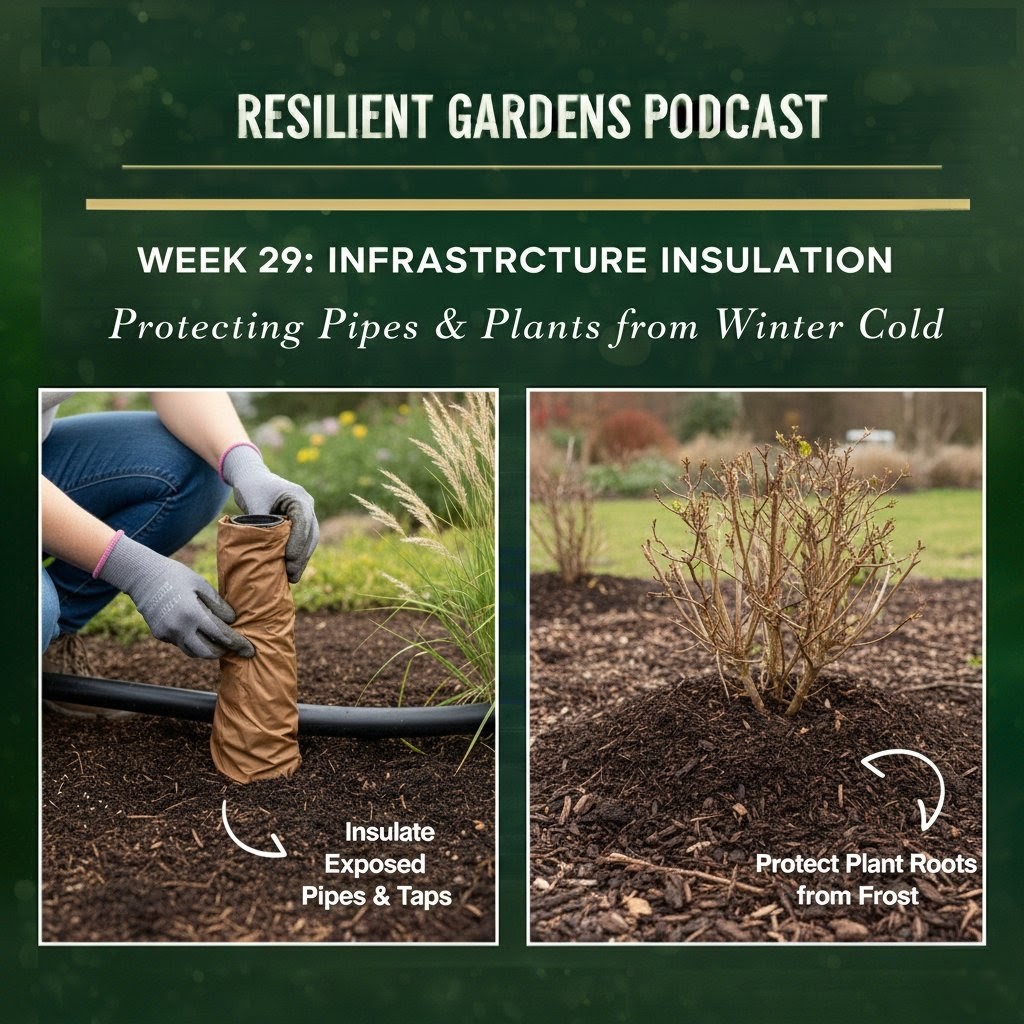
- Maintenance Win #1: The Outdoor Tap Jacket. Once the system is drained, you must insulate the tap itself. Whether using a purpose-made insulated cover or a DIY wrap of bubble wrap and a waterproof bag, the goal is to create a trapped layer of air. This air pocket acts as a buffer, preventing the metal casting from reaching the “critical freeze” temperature where any residual internal moisture would expand and crack the hardware.
- Maintenance Win #2: The Pot Feet Lift. Terracotta and ceramic containers are highly susceptible to frost-shattering at the base. When a pot sits directly on a cold patio, it often rests in a pool of water. When that water freezes, it bonds the pot to the ground and expands into the base. By using “pot feet” or even old bricks to lift containers, you break contact with the frozen ground and allow air to circulate underneath, ensuring the base remains dry and intact.
Choosing “Climate-Hero” Materials for the Future
If you are currently upgrading your infrastructure, you can design for resilience by selecting materials specifically engineered for the freeze-thaw cycle. These choices are a vital part of future-proofing your garden:
- Polyurethane Hoses: Standard PVC hoses become brittle and crack in the cold. Polyurethane remains flexible even in sub-zero temperatures, making it a much more resilient choice for year-round infrastructure.
- Vitrified Stoneware: Always look for the “Vitrified” label when buying pots. These are fired at such high temperatures that the clay becomes non-porous. Because water cannot enter the material, it cannot cause the internal pressure that leads to frost-shatter, making them a wise long-term investment.
- Sheep’s Wool Insulation: A permaculture favorite, raw sheep’s wool is a superior, sustainable “thermal shield.” Use it to wrap large, vulnerable containers or delicate tree ferns; it’s breathable and offers far better protection than plastic-based wraps.
The Weekend Frost Audit
Building a resilient garden is about securing the skeleton of your outdoor space before the weather turns. This weekend, I encourage you to perform a quick “Frost Audit” using my 1-2-3 Action Plan:
- The Dry-System: Drain and disconnect all hoses and store them away.
- The Tap Wrap: Insulate your outdoor valves to trap a protective layer of air.
- The Pot Feet Lift: Elevate your ceramic and terracotta containers off the frozen ground.
Taking these steps ensures that when the spring thaw arrives, your garden is ready to “breathe and drink” without the need for expensive repairs. Is your garden infrastructure prepared to withstand the pressure, or is there a “weakest joint” waiting to fail?