
The 15-Minute Dusk Reset: How to Trigger a Second Flush in Your Resilient Garden
The Mid-Summer Fatigue: Beyond the “Tired” Look
By the time we hit the peak of July and August, your garden is working overtime. That vibrant, lush spring growth often begins to flag under the weight of heatwaves and unpredictable flash floods. You might find yourself sitting on the patio with a G&T, looking out at a border that simply looks “tired.”
As a horticultural consultant and permaculture designer with 40 years of experience—and as a registered member of The Gardeners Guild—I’ve seen this mid-summer slump countless times. But at Morpheus Garden Care and through my Resilient Gardens philosophy, we don’t see this as the end of the season. Instead, we see it as the perfect moment for “Evening Oasis Maintenance.” By shifting your high-impact chores to the cooler hours of dusk, we can trigger a spectacular “second flush” of beauty that carries your garden all the way into autumn.
Tricking Biology: The “Seed-Set” Energy Pivot
To keep a garden vibrant, you have to understand the plant’s primary biological directive: reproduction. Once a flower fades and begins to form a seed pod, the plant initiates a “Seed-Set Shutdown.” It redirects every ounce of its energy away from aesthetic displays and toward the survival of the next generation through seeds.
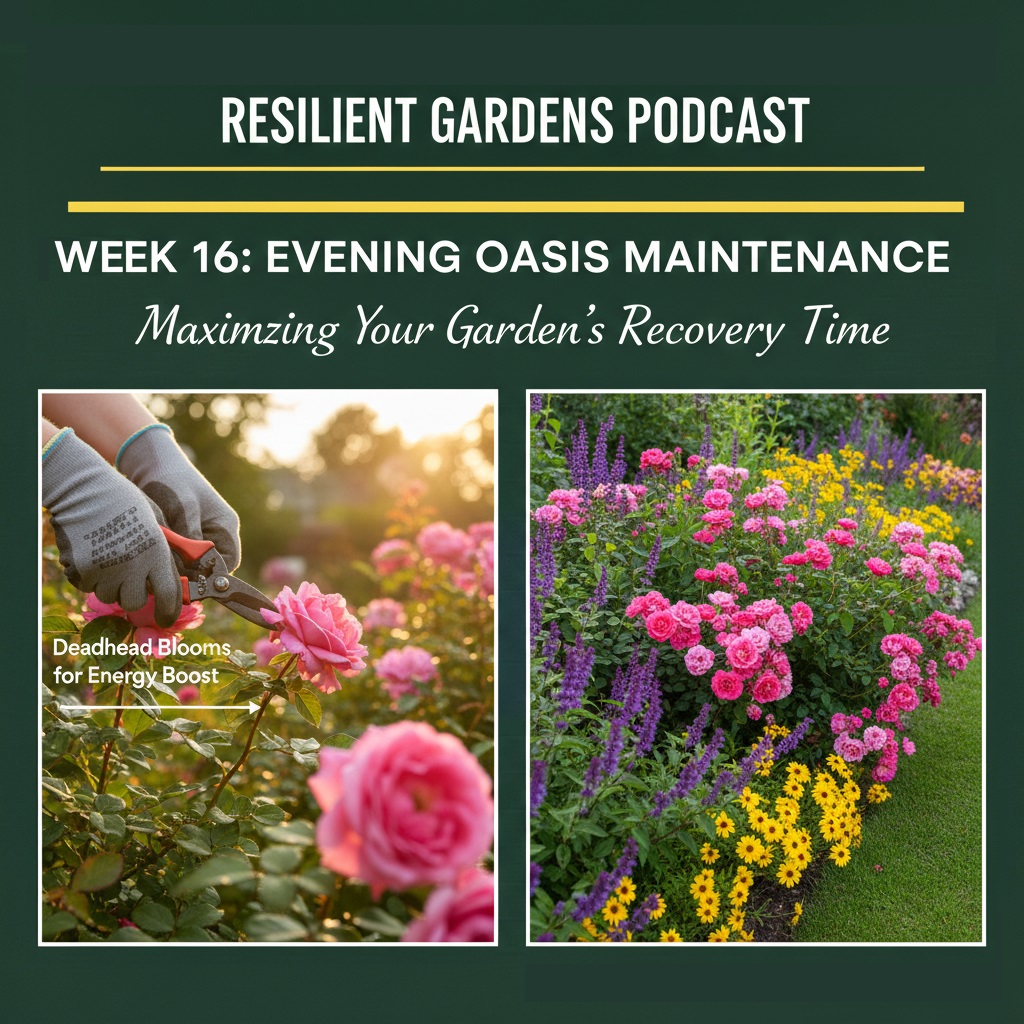
By intervening in the evening—when the plant is no longer struggling to survive the transpiration loss of the midday sun—you can perform a strategic energy pivot. Removing those spent blooms signals to the plant that its reproductive mission is incomplete, forcing it to try again.
“This ‘tricks’ the garden into a second cycle of growth, ensuring your oasis remains lush and colorful while others are turning brown.”
Timing is Everything: The ResilientGardens 1-2-3 Action Plan
There is a precise technical reason why evening deadheading is the cornerstone of our ResilientGardens 1-2-3 Action Plan. As the sun sets and the heat breaks, a plant’s sap flow changes. Sniping off spent blooms at dusk causes minimal “bleeding” of vital fluids compared to the high-pressure flow of midday.
Furthermore, the naturally higher humidity overnight provides the perfect environment for the plant to heal its pruning “wounds” in peace. While you sleep, the plant is already busy redirecting its internal resources toward the axial buds. By the time the next sun rises, the “second flush” is already being triggered, pushing out new growth without the stress of the punishing sun.
The “Deep Drinking” Method: The Cool-Touch Audit and the Soil Sponge
Evening is the only time to conduct an accurate Cool-Touch Audit. This involves a physical check of your “Mid-Summer Mulch” to ensure your moisture barrier hasn’t been breached. By feeling the soil beneath the mulch at dusk, you can identify exactly where the “soil sponge” is drying out.
Watering at this hour isn’t just about avoiding evaporation; it’s about the 8–10 hours of “deep drinking” time that daytime watering simply cannot provide. This long, cool window allows moisture to penetrate deep into the earth’s profile, recharging the root systems fully before the mercury redlines the following day.
Turning Chores into Therapy: The Scented Sanctuary
One of the greatest rewards of this shift is the sensory experience. Many of our favorite plants, particularly Lavender and Roses, release their essential oils more intensely as the air cools.
When you head out with your secateurs at dusk, you aren’t just performing maintenance; you are stepping into a “scented sanctuary.” The act of deadheading becomes a form of relaxation as these fragrances lower your stress levels. It transforms gardening from a task on a to-do list into a restorative ritual that benefits the gardener as much as the plants.
Meet the Second-Flush Superstars: Our Late-Summer Climate-Heroes
In an era of unpredictable weather, we rely on “Climate-Hero” plants that can bounce back with vigor. These three superstars are the champions of the late-summer encore:
- The Endless Bloomer (Dahlia): These are the true workhorses of the resilient garden. If you commit to deadheading them every few evenings, they will reward you with massive, vibrant blooms until the first frost.
- The Pollinator Magnet (Buddleja): Don’t let the first flower spikes remain brown. The punchline: Cut them back to the next set of leaves in the evening to trigger smaller, secondary flowers that provide vital late-season nectar for butterflies.
- The Cottage Classic (Geranium/Cranesbill): If they look “straggly” by mid-August, give them a quick evening tidy-up. Removing old stems results in a fresh carpet of green and a delicate second showing by September.
Conclusion: The Garden’s Midnight Repair Shop
We often think of the night as a period of dormancy, but that couldn’t be further from the truth.
“The garden doesn’t sleep at night; it repairs.”
By spending just fifteen minutes Facilitating that repair process at dusk, you ensure your outdoor space remains a vibrant, resilient oasis rather than a scorched memory. I encourage you to head out tonight with your secateurs and a cool drink. Your garden will reward that “tough love” with a spectacular encore.
What will your “Evening Oasis” look like tonight?