
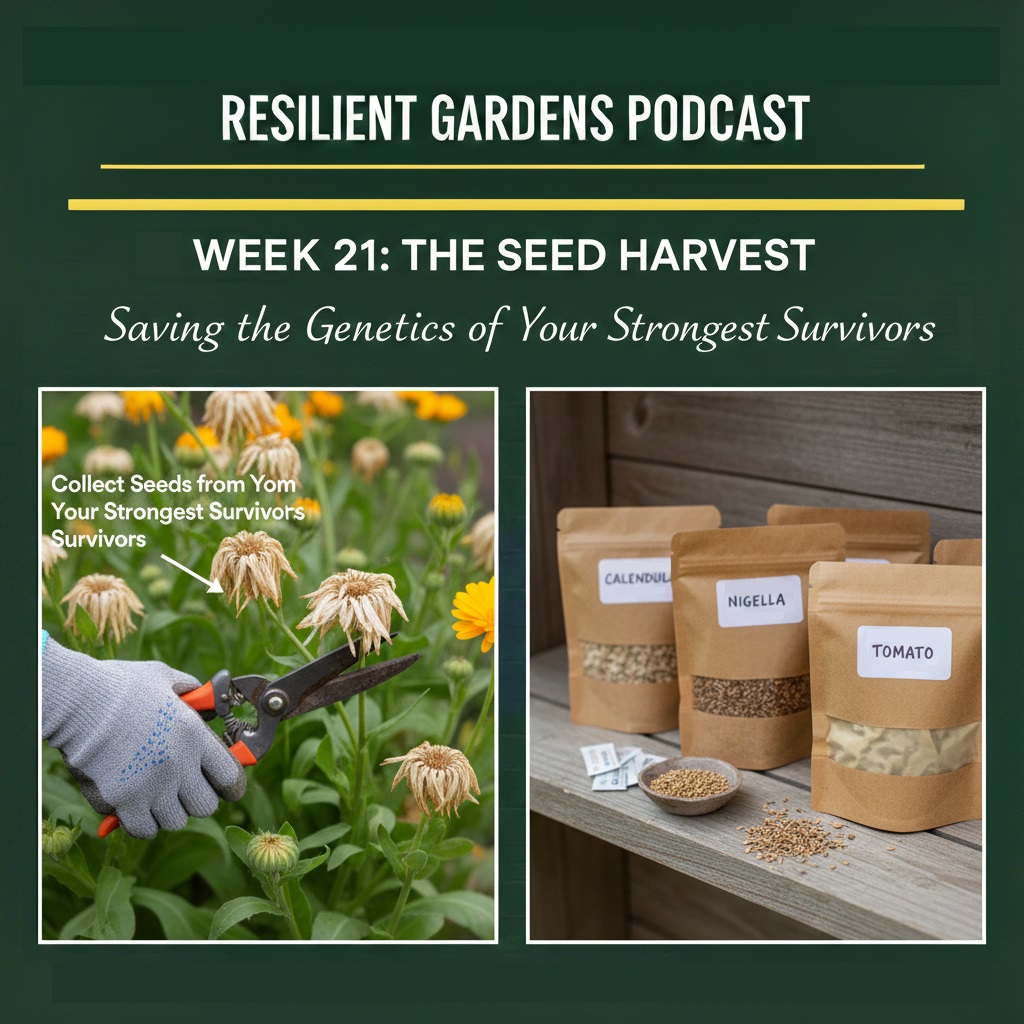
Why Your Garden’s “Survival of the Fittest” is the Secret to a Stress-Free Spring
As we reach Week 21 of our seasonal journey, your garden has just finished a grueling “stress test.” Between record-breaking heatwaves and those sudden flash floods that turn a mulch bed into a pond, your plants have been pushed to their absolute limits. You’ve likely seen the results firsthand: while some “pampered” varieties required being nursed through the afternoon with a watering can just to stay upright, others stood tall and unfazed.
In my 40 years as a consultant at Morpheus Garden Care and founder of Resilient Gardens, I’ve learned that these high-performers are more than just a seasonal success. They are the genetic blueprint for your garden’s future. We aren’t just tidying up the flower beds today; we are building a “Survivalist Seed Bank.” By embracing “hyper-local” sustainability, you can finally break the expensive, exhausting cycle of buying and replacing, and start a cycle of growing and adapting.
Plants Have “Epigenetic Memory”
The secret to a stress-free spring lies in the “climate-adapted intelligence” of the plants themselves. When you buy generic seed packets, you are often purchasing “biologically lazy” genetics. These seeds come from plants raised in climate-controlled commercial greenhouses where every need is met. They haven’t had to work a day in their lives.
In contrast, a seed harvested from your own backyard carries the specific, hardened experience of your unique soil and microclimate.
“Plants are remarkably adaptive. A seed produced by a mother plant that survived a record-breaking dry July carries an ‘epigenetic memory’ of that stress. When you plant that seed next year, the resulting plant is often better equipped to handle similar conditions than a seed raised in a pampered commercial greenhouse. We aren’t just saving seeds; we are saving climate-adapted intelligence.”
This is a total game-changer. By saving seeds from your “Strongest Survivors,” you are ensuring that next year’s garden is naturally more drought-tolerant and disease-resistant than this year’s, saving you both money and the emotional toll of watching a garden struggle.
Selection of the Fittest
To build a truly resilient landscape, you must become a ruthless editor of your backyard. This is the core of my “Selection of the Fittest” strategy.
The Top 5% Rule
Do not fall into the trap of saving seeds from every plant that survived. If you save seeds from a plant that required constant pampering or shaded protection, you are simply “breeding weakness” into your garden’s future. You only want the elite.
The Ribbon Method:
- Walk your rows: Head out into the garden during a dry afternoon.
- Identify the survivors: Look for the individuals that looked the best during the peak of the heat with the least amount of intervention.
- Tie the ribbon: Secure a bright ribbon around these star performers to mark them for harvest.
The “Breathable” vs. “Bone-Dry” Storage Hacks
Harvesting the right seeds is only half the battle; you must ensure they remain viable until spring. Avoid plastic containers at all costs—they trap moisture and invite the mold that ruins a season’s hard work. Use these two practical maintenance wins instead:
- The Paper Bag Method (Breathable Harvest): Collect your seed heads and pop them upside down into a paper bag. Paper allows vital airflow, preventing the rot that frequently ruins seeds stored in plastic. Label the bag immediately with the plant name and the date.
- The Desiccant Drive (Bone-Dry Storage): Moisture is the primary enemy of seed longevity. Once cleaned, store your seeds in a cool, dark place with a small silica gel packet or a teaspoon of dry rice. This keeps the seeds “bone-dry,” ensuring they don’t rot or attempt to germinate prematurely.
Start with the “Easy-Save” Pioneers
If you are new to building a seed bank, begin with these three “Climate Heroes.” They are exceptionally easy to identify and harvest:
- Calendula (Pot Marigold): This is our “sacrificial hero” from Week 12. These produce large, easy-to-handle seeds that look like tiny brown curls. They are incredibly reliable and will produce even tougher offspring next year.
- Nigella (Love-in-a-Mist): These are masters of self-seeding in poor, dry soil. They produce fascinating “balloon” seed pods; once the pods turn papery and the seeds “rattle” inside, they are ready for your bank.
- Heritage Tomatoes: If you have a plant that didn’t suffer from “Blossom End Rot” during a heatwave, you have a calcium-efficient survivor. To save these seeds, ferment the pulp in water for two days, rinse, and dry. You’ve just immortalized a high-performance, heat-tolerant food source.
Conclusion: Investing in a Better Tomorrow
By taking ten minutes this week to identify and collect seeds from your strongest plants, you are making a long-term investment in your land. You are moving away from a garden that struggles against the elements and toward one that evolves with them.
As I always say at Resilient Gardens, “A seed is a promise of a better tomorrow.” Which of your current “Star Performers” will you choose to immortalize this afternoon? Tie a ribbon on them today, and harvest your future next week.