
Why Your Garden is Wilting (And the 8:00 AM Rule That Saves It)
The End of the Thirsty Garden
For many of us, the ultimate goal of a garden is the harvest—the tangible reward for our sweat and patience. However, as a horticultural consultant with over 40 years of experience through Morpheus Garden Care and Resilient Gardens, I have watched the traditional “thirsty” vegetable patches of the past struggle to survive. Our “new normal” of intense heatwaves punctuated by sudden flash floods is a wake-up call. These weather extremes are testing the very limits of what I call the “soil sponge”— the earth’s natural ability to absorb, hold, and distribute life-giving moisture.
To thrive today, we must move beyond old-fashioned gardening rules and embrace “Edible Resilience.” This is a strategy where we stop fighting against the environment and start building lush, productive spaces that handle climate stress with ease. By shifting our focus to tough crops and mastering the timing of our interactions with the land, we can ensure our kitchen gardens remain a source of joy rather than a high-maintenance chore.
The Dawn Harvest Protocol (The 8:00 AM Rule)
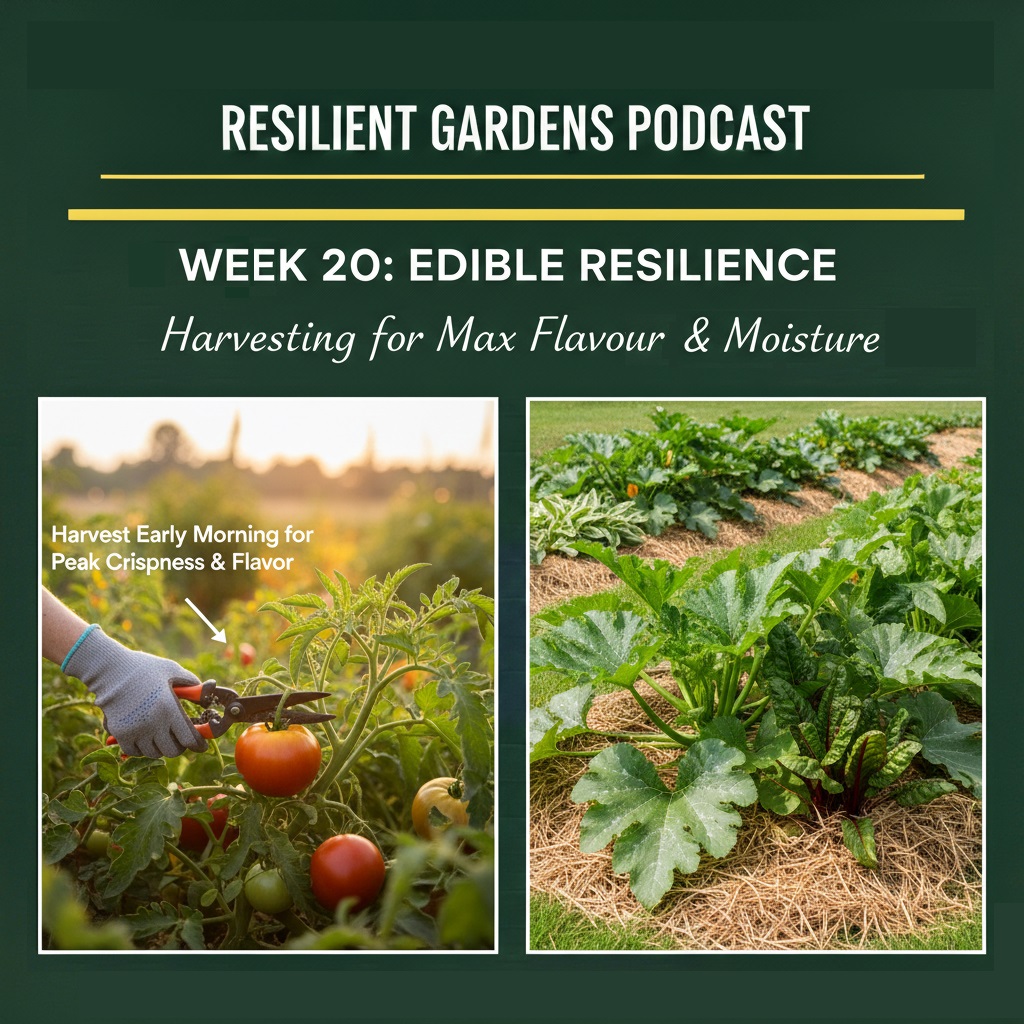
To achieve “supermarket-crisp” quality from your own backyard, you must align your schedule with the plant’s internal “Diurnal Cycle.” This is the natural rhythm of rehydration that occurs overnight. When the sun goes down, plants stop the process of transpiration and begin to draw moisture from the soil to recharge their tissues. By the break of dawn, the plant’s cells are at their peak physiological “turgidity”—meaning they are fully inflated with water and nutrients.
The Rule: Perform all edible harvesting in the early morning, ideally before 8:00 AM.
If you wait to harvest in the heat of the afternoon, you are picking a stressed, dehydrated plant. At that point, the vegetable has spent the entire day pumping moisture out through its leaves to stay cool, leaving the fruit or foliage limp, depleted, and often bitter. Harvesting before the sun is high captures maximum sugars and moisture. This results in crunchier salads, sweeter peas, and herbs with a significantly higher concentration of essential oils.
Adopting this protocol shifts our relationship with time. Instead of treating the harvest as a task to be squeezed into a busy evening, we begin to work with the plant’s internal clock. It transforms the gardener from a manager of chores into a partner in the plant’s biological peak.
The Thermal Buffer (The “Double-Potting” Hack)
Container gardening is notoriously difficult during a heatwave because of “root cooking.” Thirsty plants like tomatoes are particularly vulnerable; when their pots sit in the sun, the root zone experiences extreme temperature spikes that lead to fruit splitting and stalled growth.
To prevent this, I recommend the Double-Potting technique: Sink your plant’s pot into a larger container, then fill the gap between the two with damp sand or compost.
This simple mechanical fix creates a vital thermal buffer. The moisture held within the sand or compost drives cooling through evaporation and insulation, mimicking the natural protection provided by deep, cool soil. By protecting the plant’s most vulnerable part—the root zone—from overheating, you provide the consistent environment necessary to keep the plant productive even when the mercury rises.
Straw Mulching as a Heat Shield
In the modern climate, bare earth is a liability—in permaculture terms, it is essentially an open wound. Exposed soil loses moisture rapidly, kills off beneficial microbiology, and can become hot enough to physically damage developing produce.
For crops like squash and strawberries, I rely on clean, seed-free straw. This mulch acts as a protective skin for the garden, serving a dual purpose. First, it reflects solar radiation away from the ground rather than absorbing it. Second, it keeps the fruit from making direct contact with the baking soil, which effectively prevents “bottom rot.” This shield gives the plants the stamina they need to produce fruit during prolonged dry spells, keeping the root zone significantly cooler than the surrounding exposed earth.
The Climate-Hero Trio
A truly resilient garden relies on “Climate Heroes”—crops that require far less intervention and possess the natural traits to survive variable weather. These three champions are the backbone of the new normal:
- Swiss Chard: While spinach “bolts” (runs to seed) at the first sign of heat, Chard is a drought-proof staple. Its deep roots and thick, succulent stems act as water reservoirs, allowing it to produce lush leaves through the height of August.
- Zucchini (Courgette): These are the ultimate heat-seekers. Once established, their massive leaves act as a living mulch, shading their own root zone. This creates a natural “No-Prune” win; the plant manages its own cooling and, if mulched correctly at the base, requires very little supplemental watering to produce a heavy crop.
- Autumn-Bliss Raspberries: By choosing autumn-fruiting varieties, you bypass early summer droughts entirely. These plants fruit on “new wood,” making them far tougher and more resilient to erratic spring weather than traditional summer-fruiting types.
As I often tell my clients at Resilient Gardens:
“A resilient garden should feed the soul and the stomach.”
Conclusion: Harvesting the Future
Creating a productive garden in a changing climate is not about working harder; it is about working with the rhythm of the plant. When we choose tougher varieties and time our harvests to match the plant’s natural rehydration cycle, we move from struggling against the heat to harvesting resilience.
This week, I challenge you to set your alarm thirty minutes earlier. Spend that time in the quiet of the dawn garden, experiencing the stillness before the heat of the day. Taste the difference that a dawn harvest makes to your plate—it might just change the way you garden forever.