
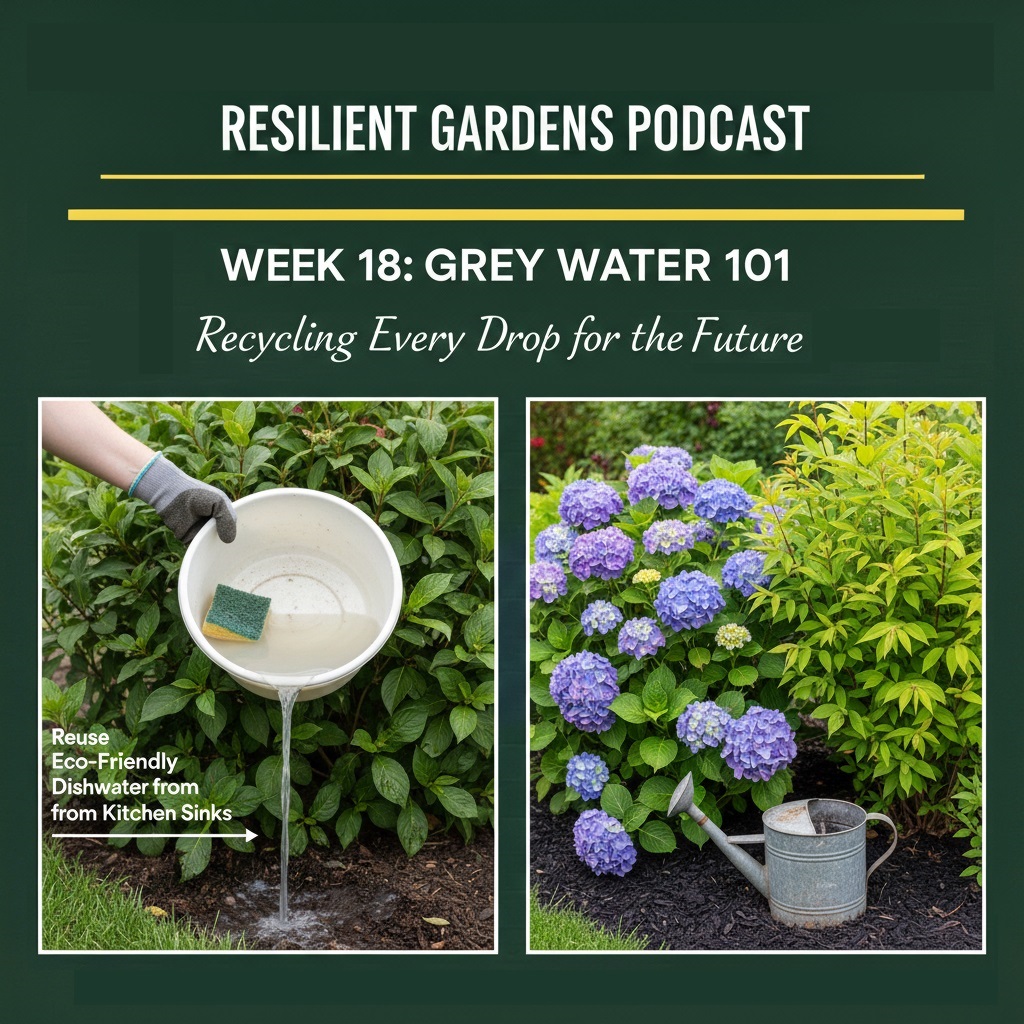
Stop Down-Draining Your Garden’s Potential: The “Liquid Gold” Secret to a Drought-Proof Landscape
As hosepipe bans become an almost annual fixture of the British summer, the traditional gardener is often left in a defensive crouch, watching helplessly as ornamental shrubs wilt under the heat. However, a resilient landscape designer views these challenges differently. Strategy begins with an audit of the invisible resources currently flowing directly into your sewers.
Graeme Farrer—a registered member of The Gardeners Guild with over 40 years of experience and founder of Morpheus Garden Care—proposes a paradigm shift: “Resilient Gardening.” This approach moves beyond passive consumption, reimagining the house and garden as a single, closed-loop system where the concept of “waste” is entirely a choice. By decoupling your garden’s survival from the municipal grid, you transform a vulnerable landscape into an independent, thriving ecosystem.
Redefining “Waste” Water: The Wealth Beneath the Drain
The first step in reclaiming your garden’s potential is identifying your untapped resources. Grey water—the relatively clean discharge from baths, sinks, washing machines, and kitchen basins—is the “liquid gold” of a resilient landscape. While no longer suitable for human consumption, it remains a life-saving resource for a thirsty garden.
The “Drain Drain” problem is a systemic failure of modern living: the average UK household sends hundreds of liters of usable water directly into the sewage system every day. During a drought, this is more than just a missed opportunity; it is a tactical error. Viewing your home as a water-harvesting hub fundamentally alters your relationship with the environment. You are no longer a victim of the weather, but an active manager of a self-sustaining cycle.
“Waste water is only waste if you choose to throw it away.”
The ResilientGardens 1-2-3 Action Plan
To turn your property into a high-performance landscape, follow the Week 18 framework designed to maximize resource efficiency.
1x The Structural Focus: The Eco-Friendly Intercept
Your primary strategic goal is to ensure the water you harvest is safe for your soil’s delicate biology. To implement the 1x Structural Focus, you must conduct a product audit. Standard household cleaners often contain high levels of sodium and boron—chemicals that act as a silent killer for gardens. This “salting of the earth” degrades soil structure over time, stripping its porosity and turning a fertile bed into a compacted, sterile environment.
- Prioritize: Eco-friendly, biodegradable dish soaps and detergents explicitly labeled as “grey-water safe.”
- Eliminate: Products containing salts, sodium, and boron.
By making these simple product swaps, you ensure that household effluents break down into harmless components, providing hydration without long-term loss of soil fertility.
2x Maintenance Wins: The Bowl, the Bucket, and the Rotation
Resource management is most effective when integrated into your daily rhythm. These two “Maintenance Wins” require no expensive plumbing—only a change in habit.
- The Kitchen Basin Catch: Place a dedicated bowl in your kitchen sink to catch water used for rinsing vegetables or washing eco-friendly mugs. This water is “free” and should be directed immediately to your high-demand zones.
- The Rotation Rule: It is vital to move your bucket from plant to plant rather than saturating the same spot daily. Directing your harvested resources to different areas prevents any localized buildup of minor soap residues that could potentially shift soil pH. This ensures your entire border benefits from the recycled supply while maintaining optimal soil health.
——————————————————————————–
To maintain a safe and healthy landscape, grey water must never be used on edible salad crops or “wet” leaves. It should be applied directly to the soil at the base of ornamental plants and shrubs to prevent bacterial growth or foliage damage.
——————————————————————————–
3x Climate-Hero Plants: The Grey Water Heavy-Lifters
Not all plants are equal in their ability to process recycled water. These three species are “Heavy-Lifters” that possess the specific root systems and physiology to thrive on grey water:
- The Thirsty Giant: Hydrangea Hydrangeas are the first to signal distress during heatwaves. Due to their massive leaf surface area, they demand high-volume hydration. They respond exceptionally well to the “bucket drench” method, which provides a deep, saturating soak that a light sprinkle cannot match.
- The Structural Hero: Cornus (Dogwood) Tough, woody shrubs like Dogwood act as sophisticated biological filters. They possess the unique ability to process the trace nutrients found in grey water and convert them into the vibrant winter stem colors that define a high-end landscape during the dormant months.
- The Screening Specialist: Prunus lusitanica (Portuguese Laurel) As a landscape designer’s staple for privacy, the Portuguese Laurel is incredibly resilient. Its deep, aggressive root system easily processes grey water, allowing it to maintain a dense, green privacy screen even when the rest of the neighborhood’s greenery has turned brown.
Conclusion: Resilience is a Choice
True resilience isn’t about waiting for more resources; it’s about the sophisticated management of the resources you already have. By closing the loop between your home and your landscape, you bypass municipal restrictions and ensure your garden remains a lush sanctuary regardless of the forecast.
“Resilience isn’t about having more resources; it’s about using what you have twice.”
As you spend this week auditing your detergents and catching your first basins of “liquid gold,” prepare for the next evolution of this strategy. Next week, we move to The “No-Prune” Rule, where we will explore why putting away your secateurs is a vital tactical move for moisture conservation.