
Why Your Garden Needs Pests: A Resilient Guide to Natural Security
The Myth of the Perfect Garden
In my 40 years as a horticultural consultant and permaculture designer, I have seen countless gardeners fall into the same exhausting, expensive trap. You spot an aphid outbreak, you reach for the chemical spray, and for a moment, the problem seems solved. But then the pests return—often in greater numbers—and the cycle begins again.
In our current era of unpredictable weather, where flash floods and intense heatwaves are the new normal, these “old rules” of total eradication are failing us. At Resilient Gardens, I teach a different approach. The goal isn’t to create a sterile, plastic-looking environment, but to transform your garden into a chemical-free ecosystem that manages itself. To achieve true resilience, we have to stop fighting nature and start leading it.
The “Empty Restaurant” Problem
The primary reason traditional gardening feels like a constant battle is what I call the “Empty Restaurant” problem.
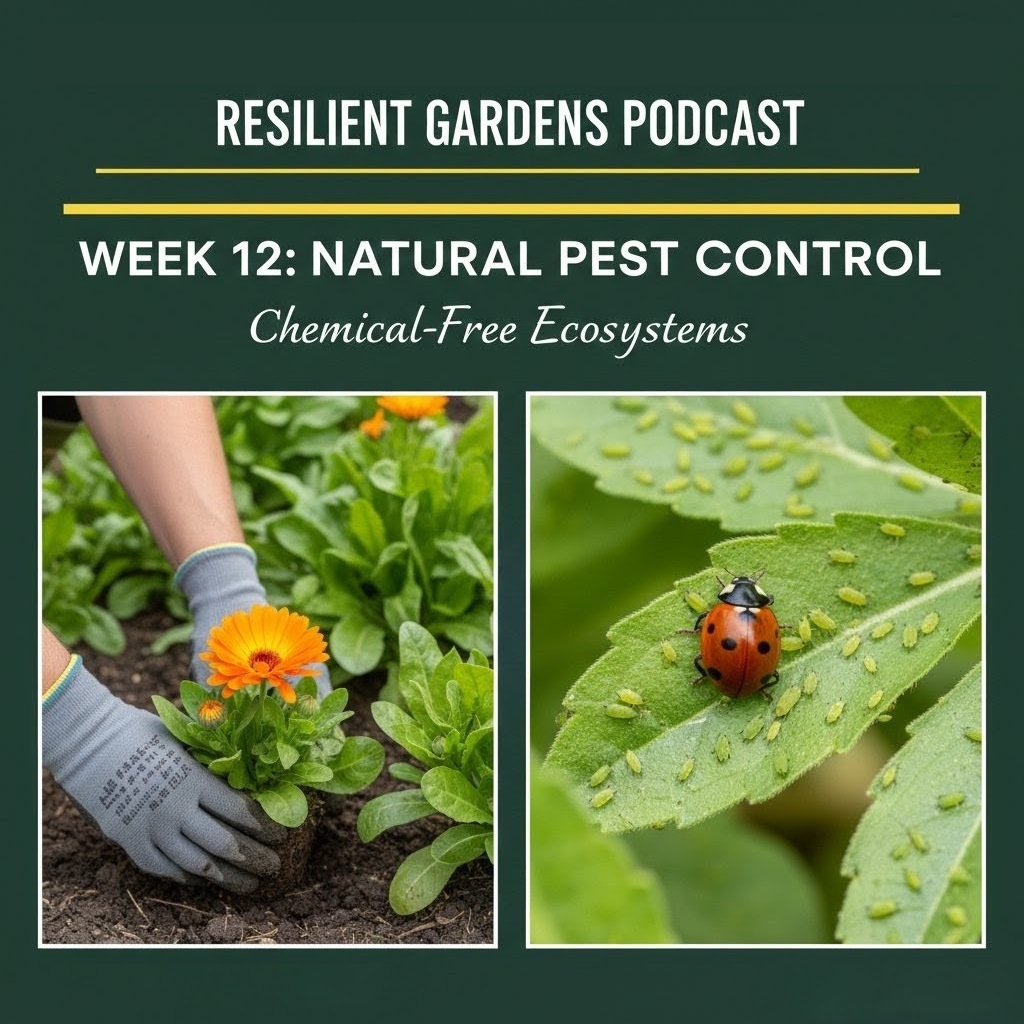
When you use chemical pesticides, you aren’t just targeting the “bad guys.” You are killing the ladybirds, lacewings, and hoverflies—the very security detail your garden needs to stay healthy.
Pests reproduce and return much faster than their predators. By spraying, you effectively wipe out the local police force while leaving the pantry wide open.
Your garden becomes an empty restaurant with no security. This void invites an even larger infestation, leaving your plants more vulnerable than they were before you ever picked up the bottle.
Pests are Just a “Predator Shortage”
To build a landscape that lasts, we must shift our philosophy from “warfare” to “balance.” I’ve spent decades observing how nature handles its own “pest” problems, and it usually comes down to one simple realization.
“In a resilient garden, ‘pest’ is just a word for a creature whose predator hasn’t arrived yet.”
If you have a pest problem, what you actually have is a predator shortage. This isn’t just garden folklore; it’s a core principle of Integrated Pest Management (IPM). When we stop aiming for total eradication, we allow the ecosystem to find a natural equilibrium where the balance of power remains in favor of your garden’s health.
Step 1: The 1x Structural Focus – The Sacrificial Strategy
The first step in my 1-2-3 Action Plan is to protect your prized plants by giving the “bad guys” a better option. This isn’t a sign of defeat; it’s the science of distraction that I’ve seen work in hundreds of landscapes.
- Calendula (Pot Marigold) and Tagetes (French Marigold): By interplanting these into your beds, you create a structural defense. Aphids and whiteflies are naturally drawn to the bright, sticky stems of Calendula, congregating there instead of on your crops. Meanwhile, the pungent scent of French Marigolds confuses the search patterns of flying insects. It’s a simple, low-cost way to make your vegetables much harder for pests to find.
Step 2: The 2x Maintenance Wins – Recruiting the Security Detail
Recruiting a natural security detail requires providing the right “amenities.” You can achieve two significant maintenance wins by making small adjustments to how you manage your space.
- Win #1: The Hoverfly Café: Plant Umbellifers such as Dill, Fennel, or Ammi Majus. These plants feature flat, open flower heads that serve as perfect “landing pads” for hoverflies and parasitic wasps. These insects are your elite security detail; while the adults sip nectar, their larvae are voracious predators that do the heavy lifting of hunting aphids while you go about your day.
- Win #2: The Log Pile Lockdown: Leave a “messy” corner in a shaded spot with a small pile of logs or stones. This isn’t just a pile of wood; it’s a high-density housing unit for ground beetles and frogs. These are your 24/7 night-shift security team, emerging while you sleep to keep slug and snail populations under control.
Step 3: The 3x Climate-Hero Plants – The Ecosystem Enforcers
To maintain a self-regulating garden that can withstand the elements, I recommend three essential “Climate-Hero” plants. These are the enforcers of your chemical-free defense system:
- Calendula officinalis (Pot Marigold): The Aphid Magnet. Job Description: This plant is tough, drought-tolerant, and designed to “take one for the team” by attracting pests away from your more sensitive border plants.
- Foeniculum vulgare (Fennel): The Predator Puller. Job Description: Its yellow flower umbels attract almost every beneficial insect in the UK. Crucially for our changing climate, its deep taproot allows it to remain lush and productive even during the intense summer droughts we are seeing more frequently.
- Tropaeolum (Nasturtium): The Scented Decoy. Job Description: An absolute must for vegetable growers. Nasturtiums act as a decoy for Cabbage White butterflies; they lay their eggs on the Nasturtium leaves, leaving your kale, broccoli, and cabbages untouched.
Conclusion: Balance, Not Warfare
The shift from being a “pest controller” to an “ecosystem leader” is the most rewarding transition a gardener can make. By following this 1-2-3 Action Plan—focusing on sacrificial structures, creating predator habitats, and planting climate-hero enforcers—you can finally step back and let nature take the lead.
Your role is no longer to fight a constant battle, but to build a habitat. This week, I challenge you to tuck some Marigolds into your borders or leave a quiet corner to go wild. Your security team is already waiting to move in; you just have to give them a home.